
Top Tips for Crafting an Effective Message Strategy
Understanding and implementing a strong message strategy is essential for effective brand communication. It ensures your messaging is clear, consistent, and resonates with your audience. This article will explore the fundamentals of creating a message strategy that enhances engagement and builds brand trust.
Key Takeaways
A well-defined messaging strategy is crucial for effective brand communication, enhancing engagement and ensuring consistent brand identity across channels.
Understanding the target audience, setting clear messaging goals, and crafting a Unique Selling Proposition (USP) are key components of an effective messaging strategy.
Personalization and storytelling are essential techniques to create emotional connections with customers, fostering loyalty and improving engagement.
Understanding Message Strategy
A messaging strategy serves as the backbone of your brand communication, providing a clear framework for conveying your business’s value, identity, and key messages across all communication channels. It is designed to help you connect meaningfully with your target audience, conveying unique value propositions that resonate and inspire. A brand messaging strategy is essential for achieving these goals. For example, Nike's messaging strategy is straightforward, inspiring, and sustainable, exemplified by their slogan 'Just Do It'. Similarly, Dove's 'Real Beauty' campaign focuses on conveying that beauty is about feeling great in your skin, featuring real stories from real people.
Effective communication with your target audience is essential for achieving marketing goals and establishing strong brand recognition. A well-crafted messaging strategy can transform your marketing efforts by making them more engaging, inspiring, and memorable, thereby connecting more effectively with your audience.
What is a Message Strategy?
A messaging strategy is a structured approach to communicating your business’s value, identity, and key messages consistently across all communication channels. It serves as the foundation for all marketing materials, fostering brand recognition and ensuring that your core messages are effectively conveyed. At the heart of a messaging strategy is the value messaging framework, a strategic tool designed to define and communicate unique value propositions to target audiences. Proof points, such as data, testimonials, and case studies, are essential for validating claims and building credibility within this framework.
A core messaging strategy is a vital part of a messaging plan. It defines the key messages that a brand aims to communicate. These key messages are crafted to resonate with the target audience, creating meaningful connections that drive engagement and loyalty. A well-defined Unique Selling Proposition (USP) is also integral to a messaging strategy, highlighting the unique facts about the brand or product that differentiate it from competitors.
Establishing a consistent tone of voice in your messaging strategy helps customers feel connected to your brand, motivating them to become part of your journey. Incorporating emotional messages that resonate with your audience can motivate them to take action and engage more deeply with your brand. Tone of voice and style guidelines ensure consistent communication across all platforms, reflecting the brand's personality.
Effective communication that resonates with the audience is at the heart of every successful business.
Importance of a Solid Message Strategy
A solid messaging strategy is crucial for businesses as it enhances customer engagement, ensures brand consistency, and offers competitive differentiation. When your messaging strategy resonates well with your audience, it leads to increased brand loyalty and retention, making your brand more memorable and trustworthy. For instance, Old Spice's messaging strategy uses humor to engage customers and differentiate itself from other deodorant brands.
Consistent brand messaging fosters trust and credibility, making it easier for customers to relate to and remember your brand. This consistency not only helps in building a strong brand identity but also ensures that your marketing messages are clear and cohesive across all platforms. A strong messaging strategy differentiates your brand from competitors, helping it to stand out and achieve market relevance.
Establishing a consistent brand voice and clear messaging guidelines ensures that all communication efforts align with your broader business objectives. This alignment is essential for creating a unified brand image that resonates with your target audience and enhances overall marketing effectiveness. For example, Pharmacy2U added approximately 7000 new customers each week in 2018 by illustrating clear communication between the organization and customers.
Key Components of an Effective Message Strategy
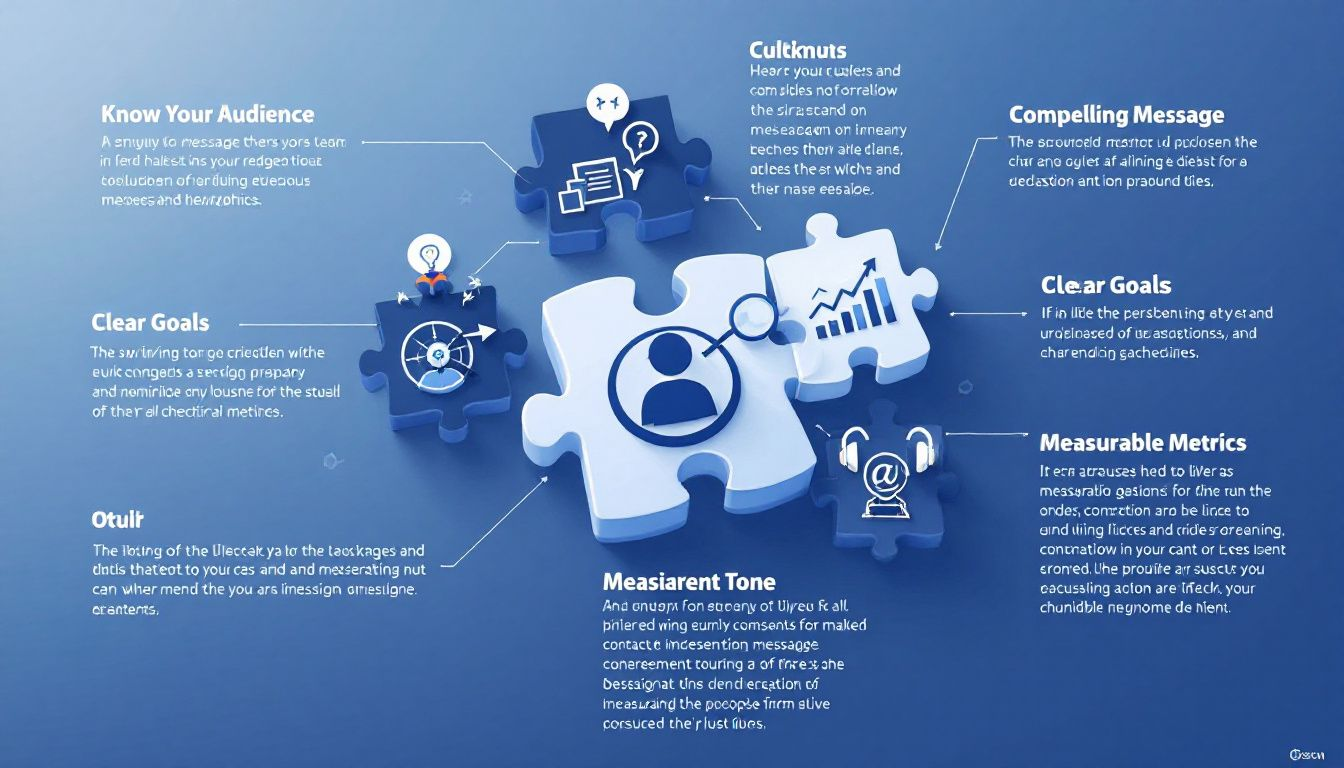
An effective messaging strategy conveys key messages that resonate with target audiences and supports brand communication. The key components of an effective messaging strategy include understanding your target audience, defining clear messaging goals, and creating an advertising message strategy that highlights a unique selling proposition (USP). Buyer personas, which are fictional representations of ideal customers including demographics, pain points, motivations, goals, and communication preferences, play a crucial role in tailoring these messages effectively.
A coherent framework in a messaging strategy supports clear communication and goal alignment across all marketing efforts. This not only enhances brand clarity and credibility but also helps define the brand’s identity across various communication channels, including a brand messaging framework.
Identifying Your Target Audience
Identifying your target audience is the first step in creating an effective messaging strategy. This involves creating user personas that profile your target audience by identifying their motivations, challenges, and aspirations. Understanding customer pain points is crucial as it helps to create messages that resonate and feel personal to the audience.
Direct engagement through social media and community events can offer valuable insights into audience preferences and behaviors. Gathering this information allows you to tailor messages that enhance engagement with your brand. A comprehensive understanding of your target audience leads to more effective and meaningful communication efforts.
Knowing your target market allows you to craft messages that address specific needs and desires, ultimately leading to stronger audience engagement and brand loyalty. This tailored approach ensures that your marketing messages are relevant and impactful, driving better results.
Defining Clear Messaging Goals
Defining clear messaging goals is essential for ensuring that your communication efforts align with broader business objectives. By setting SMART goals (Specific, Measurable, Achievable, Relevant, Time-bound), you can create actionable and measurable communication objectives that provide direction and focus.
Clear messaging goals help to align messaging activities with desired outcomes, ensuring that all efforts contribute to achieving your overall marketing strategy. A SMART goal for a messaging strategy might be to increase brand awareness among small business owners by 20% in open rates over three months via email.
This clarity and focus are essential for creating a cohesive and effective messaging strategy.
Crafting a Unique Selling Proposition (USP)
A Unique Selling Proposition (USP) highlights the distinctive attributes or features that set your brand apart from competitors. Identifying opportunities for differentiation from competitors can lead to unique features or superior customer service that make your brand stand out. For instance, Hismile uses a benefit-driven messaging strategy to communicate its unique selling points in oral care.
To discover your USP, identify the overlap between your strengths, customer desires, and market gaps. This intersection is where you can find your unique value proposition that resonates with your target audience. Effectively communicating your USP attracts ideal customers and reinforces your brand differentiation.
A well-crafted USP helps to define your brand’s identity and enhances customer retention by clearly articulating what makes your product or service unique. This differentiation is crucial for building a strong brand presence in a competitive market.
Developing Your Core Message

Developing your core message is crucial as it encapsulates your brand’s values and resonates with your audience. This core message serves as the foundation for all your marketing communications, ensuring that your brand’s identity is consistently conveyed across all channels. For instance, Bombas communicates its core cause-related messaging with 'One Purchased = One Donated', effectively connecting with customers emotionally.
Focusing on your core message helps create a unified and coherent brand image, enhancing recognition and loyalty. This central message should be clear, compelling, and reflective of your brand’s unique value proposition, serving as your brand positioning statement.
Creating a Compelling Brand Story
Incorporating storytelling into your messaging strategy adds depth, resonance, and humanizes your brand, setting you apart from competitors. Sharing your business story connects with customers emotionally, which is vital for building long-term relationships. Effective messaging goes beyond product features and benefits; it taps into emotions, making it easier for customers to connect with your brand. Messaging should also be concise and actionable, using relatable narratives and speaking to customers in their own language to ensure clarity and impact.
Before:
A brand story creates an emotional connection, making messages memorable and impactful. Key elements of a brand story include the origin of the brand, service offerings, mission significance, and the brand journey. Framing these core elements in a compelling brand story serves to humanize the brand and differentiate it from the competition.
After:
Key elements of a brand story include:
The origin of the brand
Service offerings
Mission significance
The brand journey
Framing these core elements in a compelling brand story serves to humanize the brand and differentiate it from the competition.
Utilizing storytelling can effectively engage audiences by presenting relatable challenges that your products can resolve. This approach not only makes your communication more engaging but also enhances audience retention and loyalty.
Ensuring Consistency Across Channels
Maintaining message consistency reinforces brand identity and avoids customer confusion. Consistent messaging across channels is crucial to prevent customer frustration and ensure a cohesive brand image.
An example of inconsistent messaging is a brand being casual on social media but formal on its website. A cohesive message strategy across all channels is essential to enhance brand perception and ensure effective communication.
Personalizing Messages Throughout the Customer Journey
Effective personalization requires understanding customer needs at each stage of their journey. By tailoring messages based on customer behavior and interactions, you can create more relevant and engaging communication.
Continuous testing and adaptation help ensure that your messages remain aligned with changing customer preferences and market conditions. Personalized email campaigns, for example, have shown to significantly increase user engagement and retention rates.
Tailoring Messages for Different Touchpoints
In-app messages can be tailored to deliver relevant information based on the user’s current activities. Effective in-product messaging can lead to improved user experience by addressing specific needs during product interaction. Effective messaging builds brand loyalty and reinforces the perception of reliability, which improves customer retention.
To ensure messaging resonates with customers, it’s essential to directly target their needs and provide the right solutions. In-product messages displayed to customers inside the product can cater to their immediate needs, enhancing user satisfaction.
A key benefit of in-app messages is their relevance to the user’s current needs, which helps in maintaining engagement. Tailoring messages for different touchpoints such as social media, email, and in-product interactions is crucial for effective communication.
Utilizing Customer Feedback
Regularly soliciting customer feedback can reveal valuable insights that enhance messaging relevance. By incorporating customer data and feedback, you can optimize your message effectiveness over time. Customer feedback on competitors’ products can also inform your own product development and marketing strategies.
This continuous loop of feedback and refinement ensures that your messaging remains relevant and impactful.
Analyzing Competitors and Adjusting Your Strategy
Competitor analysis is crucial for developing distinct messaging that effectively showcases your brand’s strengths. By understanding your competitors’ strengths and weaknesses, you can refine your own messaging strategy to better position your brand in the market.
Analyzing competitors’ messaging helps in distinguishing your product from theirs, ultimately enhancing your market presence. This continuous monitoring allows you to adapt and improve your messaging to stay relevant and competitive.
Conducting Competitor Analysis
Gathering competitor messaging involves collecting data from various sources such as homepages, product pages, and emails. This data provides insights into how competitors frame their brand, highlight their unique selling points, and address customer needs.
Evaluating competitors’ online presence, including their websites, SEO strategies, and social media engagement, helps in understanding their market position. The messaging hierarchy framework assists in comparing competitors’ key messages and value propositions, offering valuable insights for refining your own messaging strategy.
Adapting and Improving Your Messaging
Insights from competitor analysis can reveal gaps and opportunities in your messaging, allowing you to adjust strategies for better engagement. Sharing drafts of materials among internal teams to gather input and improve messaging strategies is also crucial.
Adapting messaging in response to competitor analysis is vital for staying relevant in a competitive landscape. Regularly refining your messaging based on competitive insights and internal feedback ensures that you remain aligned with market trends and audience expectations.
Testing and Refining Your Message Strategy
Regularly updating competitor messaging analysis allows for ongoing adjustments to your own messaging strategy. Ongoing monitoring of competitor messaging changes is vital for timely adjustments in your own strategies.
Creating accessible resources for your team based on competitor analysis can enhance collective understanding and responsiveness. Refining marketing messages based on competitor insights can help highlight unique benefits and features of your offerings.
Implementing A/B Testing
A/B testing is a method used to assess messaging effectiveness by comparing different messaging approaches to determine what resonates best with the audience. This involves testing two or more variations of messages or visuals to identify which performs better among your audience.
Common KPIs used to measure the success of messaging in A/B tests include engagement rates, conversion rates, click-through rates, and open rates. Manual implementation of A/B tests can be challenging, so using automated tools like Google Analytics can help track results accurately and efficiently.
Analyzing Results and Making Adjustments
Analyzing audience reactions can reveal insights that directly inform and refine messaging strategies. Engagement metrics such as likes and shares are crucial for assessing the success of social media messaging strategies.
Iterative refinement of messaging ensures alignment with audience expectations and market trends. Increased signups from 40-45% to 55-60% provide evidence of the effectiveness of the adjusted communication strategies.
Message Strategy Examples Across Different Channels
Effective messaging strategies narrate a story and set a vibe. They also establish a connection with the audience. The focus of messaging strategy examples is on key channels for message strategies. The channel through which a marketing message is delivered significantly influences its effectiveness.
For instance, Apple’s iPhone ads aim to create excitement about what the phone can do, showcasing its unique features in a compelling way. Apple's messaging strategy emphasizes simplicity and benefits, avoiding technical jargon to connect with consumers.
Social Media Messaging Strategies
A sample messaging strategy mentioned for ClickUp is to offer a solution to a major project challenge. Effective social media messaging strategies can significantly boost engagement and brand awareness.
To track the performance of social media messages, it is important to monitor posts, images, infographics, and topics. This tracking helps in understanding what resonates with the audience and refining the messaging strategy accordingly.
Email Marketing Messaging Strategies
Effective email messaging strategies are significant for driving growth and enhancing user activation. Email messaging maintains a direct connection with customers, fostering engagement. Personalizing messaging based on in-app user behavior is crucial to avoid contributing to inbox noise.
Tools like Userpilot and HubSpot integration can help in personalizing email messages effectively.
In-Product Messaging Strategies
In-product messaging plays a crucial role in guiding users through their experience, increasing engagement and satisfaction. Providing timely, relevant messages within the product can significantly improve usability by helping users navigate features more effectively.
Effective in-product messaging must integrate seamlessly with the user interface, ensuring that messages appear at appropriate moments without disrupting workflow. Utilizing data analytics to understand user behavior can help tailor in-product messages, enhancing relevancy and impact.
Best Practices for a Strong Message Strategy
An effective messaging strategy is essential for establishing a distinct voice in competitive markets and ensures consistent communication across platforms. Setting measurable goals in communication ensures clarity, direction, and alignment with business objectives.
Key best practices for an effective messaging strategy include consistency, personalized targeting, and experimenting with messaging. By following these practices, you can create a good messaging strategy that resonates with your audience and drives results.
Maintaining Consistency
Consistency in messaging is essential for avoiding confusion and building a trustworthy brand image. Creating internal guidelines for messaging can help ensure that all team members deliver consistent communication.
A consistent brand voice across all channels reinforces brand identity and enhances customer retention by providing a seamless experience. This consistency is crucial for building brand loyalty and trust.
Making Messages Personal
Understanding customer pain points is crucial for crafting messages that feel relevant and resonate emotionally. Personalizing messages is essential for creating impactful and relevant communications with customers.
Addressing specific pain points through personalized messaging fosters deeper connections and enhances customer loyalty. Effective communication that includes personalized messages can significantly improve customer engagement and satisfaction.
Incorporating Storytelling
Storytelling is a powerful tool that allows brands to convey their message in a relatable and engaging manner. Leveraging narratives helps foster emotional connections that resonate more deeply with the audience.
Incorporating storytelling into messaging strategies can be achieved through relatable characters, compelling plots, and authentic emotional experiences. The benefits of storytelling in messaging include increased engagement, improved recall of information, and a stronger brand identity.
Summary
Crafting an effective message strategy is an art that requires understanding your audience, defining clear goals, and consistently delivering your core message. By focusing on key components such as identifying your target audience, developing a unique selling proposition, and ensuring consistency across channels, you can create a messaging strategy that resonates and drives results. Developing a messaging strategy requires audience research to understand their pain points and preferences and to identify differentiators.
Remember, the journey doesn’t end with creating your message strategy. Continuously analyze, test, and refine your approach based on feedback and market trends. By staying adaptable and responsive, you can maintain a strong brand presence and foster lasting connections with your audience.
Curious to learn more about how Salient PR can elevate your public relations? Visit our website to explore our services and success stories.
Frequently Asked Questions
What is a messaging strategy?
A messaging strategy is essential for ensuring that your business's value and identity are communicated consistently across all channels, helping to reinforce your brand and connect with your audience effectively.
Why is a solid message strategy important?
A solid message strategy is crucial as it enhances customer engagement and ensures brand consistency, making your brand more memorable and trustworthy. This differentiation ultimately strengthens your competitive edge.
How do I identify my target audience?
To effectively identify your target audience, create user personas based on their characteristics and pain points, and engage with them directly through social media and community events. This approach will help you tailor your marketing efforts to meet their specific needs.
What are the key components of an effective message strategy?
An effective message strategy focuses on understanding your target audience, defining clear messaging goals, and establishing a unique selling proposition (USP). These elements ensure that your communication resonates and stands out in the marketplace.
How can I ensure consistency in my messaging?
To ensure consistency in your messaging, establish internal guidelines and maintain a uniform brand voice across all platforms while regularly refining your strategy based on feedback and market trends. This approach fosters clarity and strengthens your brand identity.