
PR Agency Explained: What is Public Relation Agency and How It Can Help You
A public relations agency, or what is Public Relation Agency, helps manage how your business communicates with the public and stakeholders. These agencies work to shape public perception and build brand awareness. They offer services such as media relations, crisis management, and social media strategy.
Key Takeaways
Public relations agencies specialize in managing client communications to enhance brand visibility and positive public perception through a range of services including media relations, crisis management, and content creation.
Hiring a PR agency provides businesses with expertise, access to media networks, and resource efficiency, enabling them to focus on core operations while effectively managing their public image. Additionally, PR agencies bring creativity and specialized knowledge that may not be available in-house, further enhancing the effectiveness of public relations efforts.
The success of PR campaigns can be measured using key performance indicators such as media coverage, audience reach, and social media engagement, ensuring that public relations efforts align with business objectives.
Understanding Public Relations Agencies

A public relations agency specializes in managing client communications with the public and stakeholders. They shape public perception and build positive relationships between brands and their audiences. The Public Relations Society of America (PRSA) has established guidelines to ensure that public relations professionals maintain high standards and ethics in their work. A public relations professional grasping the function and importance of PR agencies helps in leveraging their expertise to boost your brand’s image and reputation.
PR agencies vary in form, from boutique firms with specialized services to large teams offering comprehensive PR strategies. Regardless of their size, PR agencies consistently focus on influencing public perception and managing stakeholder relationships. They also provide additional services such as event planning, market research, and content writing to support their clients' communication goals.
PR agencies are crucial for businesses, government bodies, NGOs, and nonprofits needing to prepare, promote, and protect their brands. International pr agencies can help in these efforts, and a good pr agency can assist as well. Public affairs and government relations manage communications with government bodies and regulatory agencies to influence public policy, further expanding the scope of PR services.
Definition of a PR Agency
Essentially, a public relations agency offers services to manage public perception and boost brand visibility. These agencies offer a range of services, from crafting press releases to managing full-scale PR campaigns.
PR agencies range from boutique firms with specialized services to larger ones offering diverse PR solutions. A PR team shapes public perception and nurtures positive stakeholder relationships.
Businesses frequently hire PR agencies to manage their public relations, ensuring their brand is well-prepared and protected.
Key Roles of PR Agencies
Key roles of PR agencies include:
Managing client reputations through strategic communication
Promoting positive narratives
Creating favorable public images through media coverage
Establishing effective media relations
This entails a comprehensive approach to public relations that enhances the visibility and credibility of clients.
They develop crisis communication strategies to safeguard client reputations during threatening events. Whether managing brand image during a crisis or enhancing visibility via positive media stories, PR agencies are pivotal in PR management.
Core Services Offered by PR Agencies

PR agencies offer diverse services to manage and enhance a brand’s public image. Services include message crafting, media list development, and press release writing. Effective press releases contain newsworthy information that captures the attention of journalists and editors, ensuring that key messages are communicated effectively. They also offer brand management strategies to create and maintain positive public perception. As media consumption and communication patterns evolve, PR agencies continuously adapt their strategies to meet client needs.
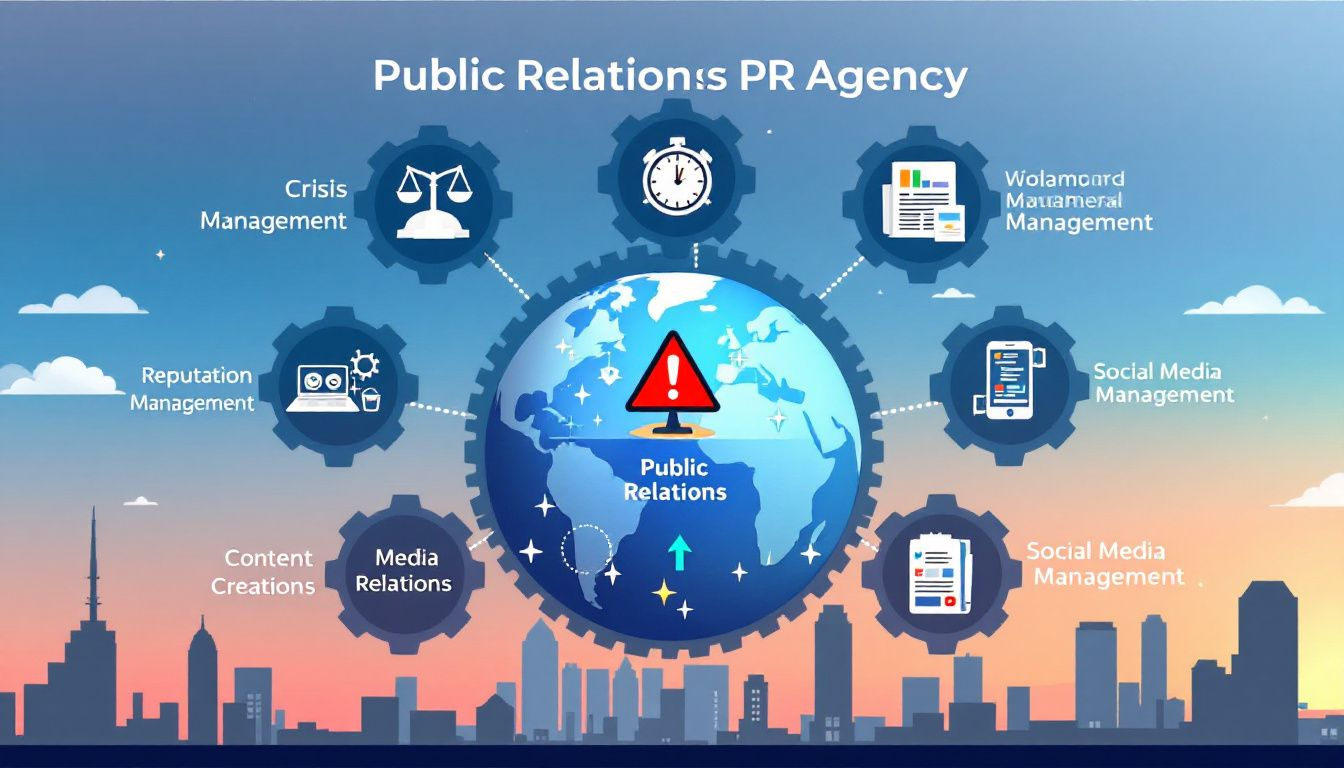
Core services offered by PR agencies are vital for a comprehensive PR strategy. These services include:
Media relations
Crisis management
Social media management
Press release crafting
Each service ensures a brand’s message is effectively communicated to its target audience.
PR agencies combine communication expertise, creativity, and extensive knowledge to deliver effective PR strategies that resonate with audiences.
Media Relations
Media relations are central to PR agencies’ work in public relations management. It involves building and maintaining beneficial relationships with media outlets to communicate clients’ messages effectively. PR agencies manage these relationships to secure media coverage, enhancing a brand’s visibility and credibility. A PR agency's media relations strategy involves identifying industry-specific journalists and pitching relevant story ideas to ensure targeted and impactful coverage.
They also build relationships with influencers and customers, increasing their clients’ reach. A strong media relations strategy generates positive press coverage, raises awareness, and builds brand credibility.
They secure valuable coverage through press releases, media interviews, and facilitating media interactions.
Crisis Management
Crisis management is another crucial service provided by PR agencies. They develop crisis communication plans to handle media inquiries. These plans help navigate sensitive situations during crises. Events like natural disasters, product recalls, scandals, and cybersecurity breaches can significantly threaten a brand’s reputation. Crisis communication helps reduce negative impacts. During a crisis, PR agencies activate communication specialists to support management, ensuring a coordinated and effective response. It also maintains public trust.
PR agencies assist in crisis management by developing comprehensive communication strategies and conducting damage control, ensuring the brand’s image remains intact.
Social Media Management
In today’s digital age, social media management is a crucial service offered by PR agencies. They craft and execute social media strategies, including content creation and audience engagement. PR agencies handle various social media aspects, from strategy and messaging to influencer management, to engage audiences effectively. Influencer relations, which involve identifying and collaborating with social media influencers and industry leaders, are also a key component of these strategies, helping to promote products or services to a wider audience.
Successful campaigns like the Ice Bucket Challenge and Lego’s ‘Rebuild the World’ show social media’s power in enhancing brand identity and community involvement. Leveraging social media platforms, PR agencies can significantly expand a brand’s reach and influence.
Press Releases
Press releases are fundamental tools in PR agencies’ arsenal. They shape public perception by delivering key messages that media outlets can pick up. PR agencies collaborate with clients to craft compelling press releases that attract journalists and generate media coverage.
This collaboration ensures press releases are informative and engaging, increasing their chances of media pickup. Well-crafted press releases enable PR agencies to effectively communicate a brand’s message to a wide audience.
The Strategic Communication Process
Strategic communication is at the core of PR agencies’ work. They create strategic communication plans that align with business objectives, guiding all PR activities to achieve desired outcomes. Collaboration between business owners and PR teams is key to these strategies’ success. Understanding the customer journey and pinpointing critical junctures allows PR agencies to create strategies that resonate with the target audience.
A successful strategic communication plan involves key components like market research, content creation, and media training. These elements ensure a brand’s message is effectively communicated and accurately represented.
Clear communication about how often to connect and topics to discuss with your PR agency is vital for alignment and achieving desired results.
Market Research
Market research is a foundational element of strategic communication. It involves analyzing market trends and identifying key audience segments to formulate effective strategies. Thorough market analysis allows PR agencies to understand public opinion and tailor messages to resonate with the target audience.
This understanding is crucial for developing strategies that reach and engage the intended audience, enhancing the brand’s image and reputation.
Content Creation
Content creation is a vital function of PR agencies, aimed at engaging stakeholders. PR agencies create diverse content types, from articles and blogs to engaging social media posts. Copywriters in these agencies develop compelling messages and persuasive copy that resonate with the audience.
Effective content creation significantly boosts stakeholder engagement and brand visibility, making it essential for any PR strategy.
Media Training
Media training is a key service offered by PR agencies to prepare clients for press interactions. Media training ensures clients handle media inquiries and public speaking engagements confidently. Techniques include role-playing scenarios and communication strategy advice.
This training protects a client’s reputation by preparing them to communicate effectively with the press. An effective media training example is the CEO of Chicken Treat’s preparation, showcasing the importance of being well-prepared for media interactions.
Benefits of Hiring a PR Agency
Hiring a PR agency can bring numerous benefits to a business. One primary advantage is enhanced visibility and reputation from leveraging the agency’s media connections. Successful PR campaigns can significantly shape public perception and enhance brand identity, as seen in campaigns by Starbucks and Apple. PR agencies can also identify thought leadership opportunities for businesses, positioning them as experts in their industries. Outsourcing PR activities saves time and provides expertise, allowing businesses to focus on core operations.
PR agencies offer extra support and media contacts, enhancing efficiency over in-house teams. By bringing in experts with a deep understanding of traditional and digital media, businesses can ensure effective PR campaigns that achieve desired results. This expertise is invaluable in managing a brand’s reputation and navigating public relations complexities.
Expertise and Experience
The expertise and experience PR agencies offer are crucial for effective reputation management. A PR agency’s primary goal is to enhance the client’s public image by monitoring, guarding, shaping, and reshaping the brand’s reputation.
Essential skills for modern PR professionals include mastery of traditional and digital media, message crafting, and SEO. Reviewing client testimonials and agency ratings in directories provides insight into PR agency effectiveness. Negative reviews on third-party sites can also impact a brand's reputation, making it essential for PR professionals to address such feedback proactively.
For instance, De Beers Group enhanced its public image by shifting media focus from luxury to ESG-related communications.
Access to Media Networks
Access to media networks is another major benefit of hiring a PR agency. Strong media relationships give PR agencies essential pathways to influence public perception and coverage. Established connections with journalists and media outlets enable PR agencies to advocate effectively for clients and secure interviews, features, and coverage that might not otherwise be available.
Providing timely press releases and exclusive news stories, PR agencies create opportunities for clients to gain valuable media attention. This media access often results in increased brand visibility, positive media coverage, and enhanced public perception.
Time and Resource Efficiency
Outsourcing PR activities to an agency allows businesses to focus on their core operations while PR experts manage their campaigns. This can save both time and resources compared to managing PR in-house. Employing experienced PR professionals ensures that campaigns are handled effectively, optimizing impact and results.
Overall, utilizing a PR agency allows for a more efficient allocation of business resources and time, enabling businesses to achieve their PR goals without diverting focus from their primary activities.
How to Choose the Right PR Agency
Choosing the right public relations agency is a critical decision that can significantly impact your brand’s public image. It’s essential to evaluate potential PR agencies thoroughly to ensure they align with your business objectives and can meet your specific needs.
Setting clear, measurable goals to assess the impact on brand awareness and reputation is a crucial step in this process. This section will guide you through identifying your needs, evaluating PR firms, and setting clear expectations to foster a successful partnership.
Identifying Your Needs
Before hiring a PR agency, it’s crucial to pinpoint your specific public relations needs. Understanding what services you require and the agency’s expertise in your particular industry will help you select the right PR partner.
By clearly defining your PR goals and needs, you can ensure that the agency you choose aligns with your business objectives and is well-equipped to achieve your desired outcomes.
Evaluating PR Firms
Evaluating potential PR firms involves researching case studies, client reviews, and the agency’s track record. Client feedback and results should be key criteria in your decision-making process. The agency’s score in directories can also indicate the quality of service you can expect.
Thorough research will help you find a PR firm that is a good fit for your business and can effectively manage your public relations efforts.
Setting Clear Expectations
Setting clear expectations with your PR agency is essential for a successful partnership. Open communication regarding goals, metrics, and timelines is necessary to ensure both parties are aligned.
Understanding the frequency and type of communication with your PR agency will help maintain mutual understanding and foster positive relationships. By setting clear expectations, you can ensure that your PR efforts are effectively managed and achieve the desired results.
Measuring PR Success
Measuring the success of your PR efforts is crucial to ensure that your public relations campaigns are effective and delivering the desired results. Effective PR strategies can enhance brand awareness and boost trust and credibility. They also foster strong relationships and cultivate a positive brand image.
Tracking key metrics such as media coverage, website traffic, and social media engagement can help you evaluate the impact of your PR campaigns. However, it’s important to note that it can take weeks, months, or even years to see positive results from a PR campaign, making measurement efforts more complex.
Media Monitoring
Media monitoring involves tracking publicly available news stories and social media posts to measure the success of PR campaigns. Monitoring sites report on the total number of stories achieved across various media markets, along with brand mentions on social media. Metrics such as social media reach, engagement (likes and shares), and overall brand mentions indicate positive outcomes and the effectiveness of your PR efforts. PR agencies also monitor social media conversations about brands and respond to sentiments, ensuring timely engagement and reputation management.
Addressing any negative comments promptly is also essential to maintain your brand’s reputation.
Key Performance Indicators (KPIs)
Key performance indicators (KPIs) are essential for measuring the success of PR campaigns. Common metrics include the number of media stories, audience reach, ASR value, and social media engagement and mentions. Sentiment analysis helps categorize mentions as positive, negative, or neutral, indicating how the audience feels about your brand.
Media monitoring tools are crucial for tracking these KPIs and analyzing the effectiveness of your PR campaigns.
Real-World Examples of PR Success
Real-world examples of successful PR campaigns illustrate the significant impact that effective public relations strategies can have on a brand. These case studies provide valuable insights into the power of PR in shaping brand narratives and influencing public opinion.
From increasing brand awareness to recovering from a crisis, these examples demonstrate how PR agencies can deliver tangible results for their clients.
Case Study: Brand Reputation Recovery
The ‘Save Aussie Supplements’ campaign is a notable example of successful PR strategies aimed at raising awareness and mobilizing consumers against proposed changes to the sports supplement industry. Influencer marketing played a key role, as seen in the Kynd brand campaign featuring Turia Pitt as a prominent ambassador.
Additionally, Red Bull’s Stratos campaign not only broke records but also positioned the brand as a leader in adventure sports, showcasing the power of innovative PR campaigns.
These examples highlight the importance of effective public relations strategies in recovering and strengthening a brand’s reputation after a crisis.
Successful Media Outreach
Successful media relations involve building and maintaining strong relationships with media outlets to ensure ongoing positive coverage. Strategic outreach efforts, such as personalized pitches and media events, can significantly enhance media coverage opportunities. These efforts result in increased visibility and favorable reporting, which positively impact public perception.
For instance, the ‘Summer of Barbie’ campaign generated immense public excitement and significantly boosted the movie’s box office success.
Summary
Public relations agencies play a crucial role in managing and enhancing a brand’s public image. From media relations and crisis management to social media strategies and content creation, PR agencies offer a wide range of services that help businesses communicate effectively with their audiences. Hiring a PR agency brings numerous benefits, including expertise, media network access, and time and resource efficiency. By understanding your needs, evaluating potential firms, and setting clear expectations, you can choose the right PR agency to meet your goals. Measuring PR success through media monitoring and KPIs ensures that your efforts are effective and delivering the desired results. Real-world examples demonstrate the significant impact of successful PR campaigns, illustrating the power of strategic public relations in shaping brand narratives and influencing public opinion.
Curious to learn more about how Salient PR can elevate your public relations? Visit our website to explore our services and success stories.
Frequently Asked Questions
Who do PR agencies work with?
PR agencies primarily collaborate with clients to craft effective press releases while leveraging their connections with journalists and media to promote their clients' interests in the news.
How do you work with a PR agency?
To work effectively with a PR agency, it is essential to maintain clear communication by sharing important information and providing honest feedback on their work. Additionally, challenging the agency can lead to more robust strategies and outcomes.
What is the meaning of public relation agency?
A public relations agency is an organization that specializes in managing and enhancing a client's public image through media coverage and strategic communication efforts, including the crafting of press releases. Their primary goal is to create a favorable perception of their clients among the public.
What is a public relations agency?
A public relations agency is a company that specializes in managing public perception and enhancing brand visibility through strategic communication and media relations. Their expertise is essential for effective brand management and reputation enhancement.
How do PR agencies manage crises?
PR agencies manage crises by implementing crisis communication plans, addressing media inquiries, and performing damage control to mitigate negative impacts and preserve public trust.