
Master HARO Link Builder: Tips for High-Quality Backlinks
Need high-quality backlinks to boost your SEO? A HARO link builder helps you connect with journalists seeking expert insights. This results in valuable backlinks to your site. This article will explain how HARO link building works and share tips to maximize your success.
Key Takeaways
HARO link building connects businesses with journalists to generate high-quality backlinks, enhancing SEO and establishing industry authority.
Successful HARO pitches require tailoring responses to journalists’ needs, providing unique insights, and crafting compelling, concise submissions.
Tracking HARO performance and leveraging alternative platforms like Qwoted and SourceBottle can diversify link-building efforts while maximizing exposure.
Understanding HARO Link Building

HARO link building is an innovative approach that leverages the platform Help a Reporter Out to connect businesses with journalists seeking expert insights. This symbiotic relationship benefits both parties: journalists get valuable content for their stories, and businesses gain high-quality backlinks from authoritative sources, enhancing their SEO efforts. Many businesses turn to HARO link building agencies, HARO link building service, and HARO link building services to maximize their outreach. HARO link building services allow users to acquire high-quality backlinks without doing the work themselves. These services typically charge per link, with prices ranging from $300 to $750. Additionally, HARO link building services often provide detailed reports on published articles and backlinks acquired. Many SEO agencies now include HARO link building in their standard link building campaigns, recognizing its effectiveness in improving search rankings.
The process is simple yet powerful. Responding to HARO queries can secure mentions and links in major publications, driving traffic and boosting domain authority. This method of link building stands out because it not only drives organic traffic but also positions businesses as industry leaders. However, the process of acquiring HARO links can take time, as it may take weeks for journalists to publish articles after receiving pitches. To maximize success, it is crucial to respond to HARO queries quickly, ideally within a few hours, due to journalists' tight deadlines.
What is HARO?
Help a Reporter Out (HARO) was established to bridge the gap between journalists and industry experts. Its primary purpose is to facilitate connections that result in high-quality backlinks and media exposure for businesses. HARO link building involves responding to journalists’ queries with expert insights, which can then be featured in articles, providing valuable backlinks. HARO connects journalists with expert sources who can provide quotes and insights for their articles, ensuring mutually beneficial collaborations. HARO link building services handle the entire process from pitch to publication, making it easier for businesses to focus on other priorities. Many HARO link building services also offer white-label options for agencies to resell to their clients.
Businesses can leverage HARO to secure links from high-authority publications, driving traffic, leads, and sales. Adopting HARO allows marketing professionals to strategically acquire high-authority backlinks, significantly enhancing SEO efforts. HARO can be a cost-effective way to build backlinks compared to traditional PR methods, but it requires a genuine desire to contribute valuable information to journalists.
How HARO Works for Link Building
HARO is a platform designed to connect journalists with expert sources. It facilitates communication between these two groups. Users receive HARO requests through daily emails sent three times a day, allowing them to respond to relevant queries promptly. The key to success lies in ensuring that responses align with the journalist’s requirements and are well-crafted to stand out among the competition. Timeliness is important when responding to HARO queries, as journalists often have tight deadlines.
Responding to HARO queries can generate high-quality backlinks, an essential component of a robust digital PR and SEO strategy. It’s crucial to respond quickly and meet the journalist’s needs to increase the chances of being featured.
Before responding, verify that the site aligns with your viewpoints and maintains high quality. This ensures that your contributions are relevant and authoritative, leading to better link building outcomes.
Why HARO Backlinks Are Valuable
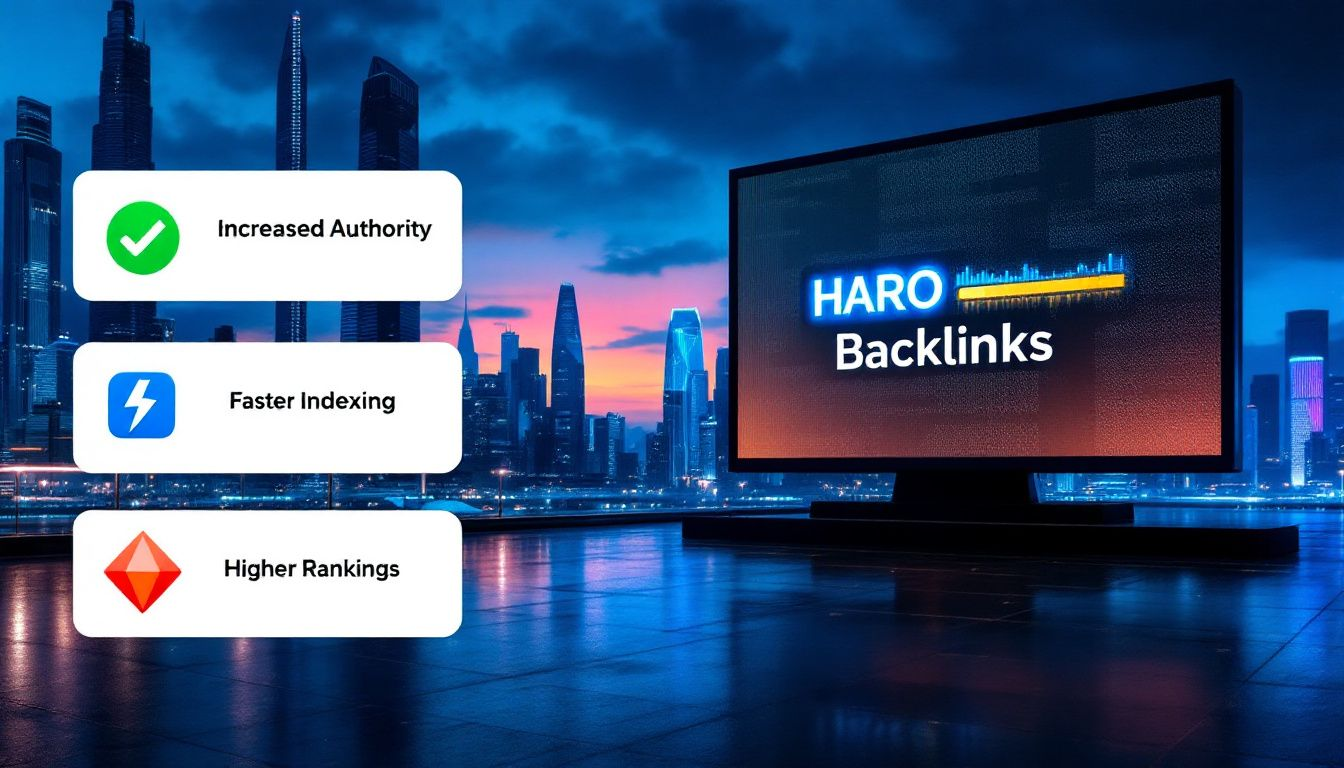
HARO backlinks are invaluable for several reasons. Firstly, they help build authoritative backlinks, which are crucial ranking signals for Google’s algorithms. These backlinks indicate authoritativeness, directly influencing Google ranking and improving your site’s visibility.
Additionally, HARO backlinks can rapidly enhance a website’s domain authority and SERP rankings. They offer a unique opportunity to gain editorial links from high-authority publications, which are often difficult to secure through other methods. This can significantly boost your overall traffic and authority.
Benefits of HARO Backlinks
Securing HARO backlinks comes with numerous benefits. These links are one of the best ways to build high-quality backlinks from authoritative websites, enhancing your brand’s credibility and visibility. Improved search rankings from these backlinks can lead to a significant increase in organic traffic, attracting potential customers.
Moreover, HARO backlinks provide valuable exposure and help establish your industry expertise. By featuring expert quotes and insights, these links not only boost domain authority but also enhance the trustworthiness of your website.
Challenges in Securing HARO Backlinks
While HARO backlinks are highly valuable, securing them can be challenging. The competition for these links is fierce, with journalists receiving hundreds of pitches for each query. To stand out, it’s crucial to respond quickly and ensure your pitches are unique and well-researched. HARO is highly competitive due to its popularity, making it difficult to stand out among many pitches.
Oversaturation in HARO link building makes it increasingly difficult to achieve results. Crafting tailored pitches that are relevant and add value to the journalist’s story is essential for success. Focusing on your area of expertise and avoiding a scattergun approach can also improve your chances of being featured.
Creating Effective HARO Pitches

Crafting compelling HARO pitches maximizes your link building efforts. Successful pitches are concise, relevant, and tailored to the journalist’s needs. They should highlight your expertise and provide unique insights that add value to the journalist’s content.
Quality pitches that resonate with journalists are key to HARO link building success. Adopting a direct and casual style, as if speaking to a friend, can make your pitches more engaging. Additionally, following up after your response is published can maximize SEO and brand benefits.
Key Elements of a Successful HARO Pitch
Tailor a successful HARO pitch to the journalist’s requirements, making it easily copyable to meet their needs. Highlighting your expertise and value to the journalist’s content is crucial. A compelling subject line, ideally around 70 characters, can significantly improve the chances of your pitch being read. Use a strong subject line in your HARO response, including the query's title, your name, and a unique identifier.
Including credentials like your job title and company name establishes credibility and trust with journalists. Using your real identity when pitching also helps build trust with publishers. Keeping your pitch between 200 to 300 words ensures clarity without losing the message. Keep total HARO pitch length between 200-300 words unless technical depth is specifically requested.
Common Mistakes to Avoid in HARO Pitches
Avoiding common mistakes in HARO pitches is essential for success. A scattergun approach—sending the same pitch to multiple queries—can be detrimental. Instead, tailor your pitches to specific queries to increase relevance. Excessive self-promotion can turn off journalists; focus on providing value and unique insights instead. Respond only to HARO queries that align with your expertise and target audience to ensure relevance.
Ensure your pitches are compelling, free of grammatical errors, and provide hard data or expert commentary to enhance their strength. Verifying the accuracy of all content in your pitch improves credibility and chances of selection. Include a clear and concise quote in your HARO response to make it easy for journalists to use it.
Thinking outside the box and offering something different can also help you stand out.
Optimizing Your HARO Profile
A well-optimized HARO profile is crucial for standing out to journalists and securing opportunities. A comprehensive profile includes details about your credentials, work history, and media features to establish authority. Incorporating a professional headshot enhances trust and credibility with journalists.
Focusing on relevant queries and ensuring your pitches align with the journalist’s needs significantly enhances the value of your responses. A credible HARO profile can significantly enhance your visibility and opportunities in media outreach.
Building a Credible HARO Profile
Creating a credible HARO profile involves crafting a well-written bio that highlights your skills and qualifications. Optimizing your bio to clearly represent your expertise and relevance is essential for attracting the attention of journalists. Utilizing HARO persona templates can streamline the profile creation process and increase your chances of being featured.
Having a professional and authoritative HARO profile is crucial for standing out to journalists and securing opportunities. Having the relevant expertise sought by reporters enhances your effectiveness in the HARO ecosystem.
Enhancing Your Expert Bio
To make your expert bio compelling, ensure it is concise and highlights your skills and qualifications. Building relationships with journalists and demonstrating your expertise increases your chances of being selected.
An impactful expert bio is essential in showcasing your expertise and relevance to journalists, enhancing your visibility and opportunities.
Tracking and Measuring HARO Success
Tracking and measuring HARO success is vital for optimizing your link building efforts. Effective tracking should include both quantitative metrics, like the number of backlinks generated, and qualitative assessments of their relevance. Monitoring referral traffic from HARO links can provide insights into user engagement and conversion rates. Monitor your HARO pitches and results to identify effective strategies and refine your approach over time.
Monitoring the quality of backlinks is crucial, as links from authoritative sources contribute significantly to your site’s credibility. Tools like Ahrefs and Terkel can help track your response effectiveness and monitor your backlink profiles.
Tools for Tracking HARO Pitches
Several tools can assist in tracking HARO pitches and measuring their success. Ahrefs is recommended for monitoring backlink profiles, while Terkel’s ‘Track your answers system’ feature helps monitor response effectiveness. Responding to every relevant query and providing insightful answers are key to enhancing your success rate with HARO.
Building a consistent link stream from HARO requires ongoing effort and time invested in crafting quality responses. HARO service providers can help focus on acquiring valuable links to build links and increase your ROI. Using HARO for link building is one of the safest and most cost-effective ways to build natural backlinks.
Analyzing HARO Link Building Results
Utilizing tools like Google Analytics and Fathom Analytics can help monitor the performance of backlinks generated from HARO responses. Semrush’s tool can show new backlinks acquired from HARO pitches, helping you analyze their effectiveness.
Clients should expect to see HARO backlinks within six to eight weeks. If your brand is mentioned but not linked, reach out and ask for a link. Consistent participation can lead to a steady stream of backlinks monthly, requiring time and daily effort.
Alternatives to HARO for Link Building
Diversifying your link building strategy is essential for reducing competition and increasing available queries. Platforms like Qwoted, SourceBottle, and Help a B2B Writer offer valuable alternatives to HARO. Each platform has unique benefits and can complement your HARO efforts, providing additional opportunities for securing high-quality backlinks.
Qwoted
Qwoted is a pitching platform that connects experts, PR professionals, and journalists. It offers both free and paid accounts, allowing users to be featured in the expert database for direct journalist outreach. Qwoted enables users to spend less time pitching and competing for journalists’ attention, making it an efficient alternative to traditional methods. Qwoted is a US-based platform, providing opportunities for experts to connect with journalists from high-authority publications in the United States. Featured, formerly known as Terkel, connects experts and thought leaders with journalists from high-authority websites.
Similar to platforms like PressPlugs, Qwoted provides direct access to journalists, facilitating relationship building and enhancing the chances of securing media coverage. PressPlugs is a U.K.-based platform that connects expert sources with major media outlets in the U.K.
SourceBottle
SourceBottle, based in Australia, provides a platform for obtaining media opportunities relevant to Australian audiences. It primarily offers Australian media opportunities, making it ideal for businesses targeting that market. SourceBottle is an Australian-based pitching platform that connects experts with media outlets in Australia.
Users receive daily emails containing relevant link opportunities, enabling them to respond promptly and secure valuable backlinks.
Help a B2B Writer
Help a B2B Writer connects experts with writers for B2B companies, providing a direct avenue for collaboration. This platform sends queries once daily, ensuring relevance to users’ industries. It allows specifying links to individual pages, enhancing SEO benefits. Help a B2B Writer connects experts with professional writers for B2B companies and sends daily opportunities to its users.
However, some drawbacks include occasional pitches being published links without links or mentions, and the platform being relatively new.
Advanced Tips for HARO Link Building Success
Advanced strategies are key to maximizing the success of HARO link building. Using a HARO service provider can implement data-driven tactics for better pitch visibility. After an article goes live, opening up a dialog with journalists can enhance your relationship and future opportunities.
Investing in strategies that have proven to work for your HARO link building efforts over time and other link building strategies is essential for sustained success in building links.
Leveraging Social Media for HARO Success
Sharing HARO mentions on social media can significantly enhance their visibility. By using targeted hashtags related to your industry, you can broaden the reach of your HARO mentions, signaling relevance to search engines and potentially attracting more traffic. Engaging with journalists on social media platforms can also help in nurturing relationships established through HARO interactions, leading to more future opportunities. Thank journalists on social media after an article is published to build relationships for future HARO opportunities.
Social media is a powerful tool for amplifying your HARO successes. When you share your mentions, it not only boosts your visibility but also showcases your credibility and expertise to a wider audience. This can further solidify your brand’s reputation and open doors for additional media coverage.
Building Long-Term Relationships with Journalists
Cultivating meaningful connections with journalists is fundamental in the HARO ecosystem. Building trust with journalists can lead to more significant opportunities for collaboration in the future. Consistent communication and sharing valuable insights are essential for maintaining these relationships.
Following up after initial HARO responses can demonstrate your commitment to fostering a professional relationship. This ongoing relationship can result in more media coverage and editorial links from high authority publications, significantly boosting your SEO efforts and brand visibility.
Summary
Mastering HARO link building requires a strategic approach, from understanding the platform and crafting effective pitches to optimizing your profile and measuring success. By leveraging HARO, you can secure high-quality backlinks, enhance your SEO efforts, and build long-term relationships with journalists. Explore alternative platforms to diversify your link building strategy and ensure sustained success. With these insights, you’re well-equipped to elevate your online presence and achieve HARO link building success.
Curious to learn more about how Salient PR can elevate your public relations? Visit our website to explore our services and success stories.
Frequently Asked Questions
What is HARO, and how does it work for link building?
HARO (Help a Reporter Out) is a platform that connects journalists with expert sources. By responding to journalist requests, businesses can gain valuable backlinks from reputable publications, which significantly boosts their SEO.
Why are HARO backlinks valuable for SEO?
HARO backlinks are valuable for SEO as they originate from high-authority websites, boosting your site's domain authority and search engine rankings. Additionally, they enhance your brand's credibility and visibility in your industry.
What are the key elements of a successful HARO pitch?
For a successful HARO pitch, ensure it's tailored to the journalist's needs, concise, and emphasizes your expertise with a compelling subject line and relevant credentials. This focused approach will enhance your chances of getting noticed.
How can I track and measure the success of my HARO link building efforts?
To effectively track and measure the success of your HARO link building efforts, utilize tools such as Ahrefs, Google Analytics, and Semrush to monitor your backlink profile and referral traffic. Regular participation and analysis will enhance the quality and impact of your results.
What are some alternatives to HARO for link building?
Consider using platforms like Qwoted, SourceBottle, and Help a B2B Writer as effective alternatives to HARO for link building. These services facilitate connections between experts and journalists, providing valuable opportunities for acquiring quality backlinks. Qwoted is a US-based pitching platform that connects industry experts, PR professionals, and journalists.