
How to Start a Public Relations Business: A Step-by-Step Guide
Starting a public relations business begins with understanding how to start a public relations business, which involves creating a solid business plan and legal setup. You’ll need strong financial planning, effective networking, and the right technology. Key considerations for starting a PR business include securing capital for initial costs, identifying your ideal client, and choosing your tech stack. Identifying your niche helps tailor your business model towards specific clients that fit well with your expertise. The costs involved in opening a public relations agency can be relatively low, especially if starting from home and utilizing existing tools. This guide will take you through each step.
Key Takeaways
To start a successful public relations agency, a comprehensive business plan, legal registration, and robust financial planning are essential.
Maintaining strong media relationships and effective communication with clients is critical for enhancing reputation and securing media coverage.
Investing in modern technology and continuously updating operational strategies can significantly improve the efficiency and competitiveness of a PR business.
How to Start a Public Relations Business: A Step-by-Step Guide
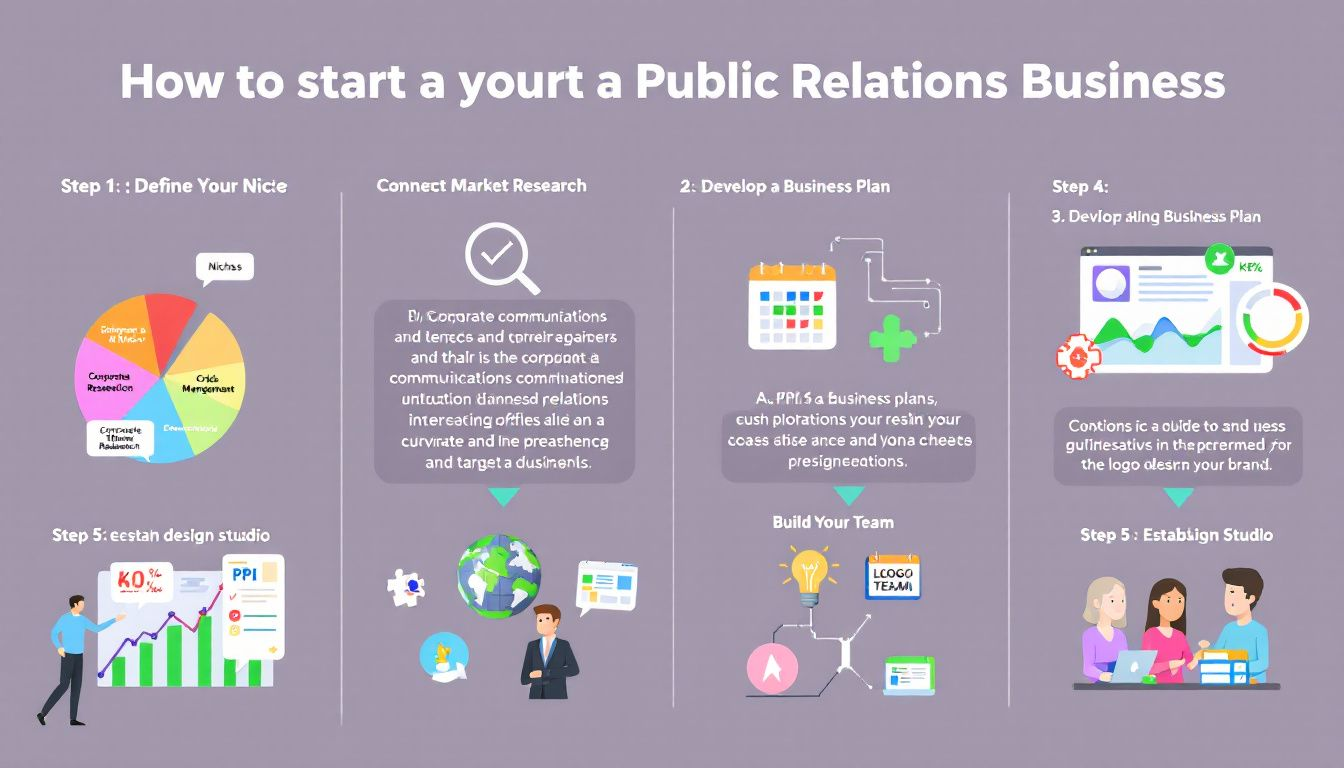
Public relations is a strategic communication process. It focuses on building relationships between organizations and their publics. To start a successful public relations agency, you’ll need a detailed business plan, legal registration, and financial planning. A comprehensive business plan for a PR business should include a SWOT analysis, financial projections, marketing strategy, and operational structure. These elements lay the foundation for success, helping you estimate costs, plan budgets, and ensure you’re financially ready. Public relations agencies can charge clients through hourly rates, project fees, or monthly retainers. Staying updated with industry trends and continuously improving your PR skills is crucial.
Creating a public relations agency involves more than just legal and financial setup. You must also focus on utilizing technology tools to enhance operational efficiency and client relationship management. Essential tools for a PR business include media databases, CRM systems, and social listening platforms. This includes investing in modern technology and flexible workspaces to accommodate various work styles in public relations agencies.
Understanding the intricacies of public relations, such as media relationships and press releases, is vital. A well-crafted press release can secure valuable media coverage, while strong media relationships can enhance your agency’s reputation. Building strong relationships with journalists and industry influencers is crucial for securing media coverage for clients. Starting your own public relations company requires a blend of strategic planning, effective communication, and a deep understanding of the PR industry.
Introduction
Creating a positive brand image in the media landscape is crucial for businesses. A good PR strategy helps create and maintain credibility, which is vital for business reputation. A PR agency can help businesses create an improved image, expand brand recognition, and reduce employee workload. Effective PR increases positive media attention, which can significantly impact a company’s reputation and customer loyalty.
Successful PR agencies often comprise diverse teams skilled in communication and media relations. A skilled team enhances your agency's capabilities and reputation. PR professionals must be persuasive people-persons who genuinely enjoy interacting with others. For startups, good PR is particularly important as it helps them grow faster and enter new markets, especially when they decide to establish their own pr agency.
Many individuals start their own company out of necessity, influenced by current circumstances such as the pandemic.
Develop a Comprehensive Business Plan
A comprehensive business plan is fundamental for any aspiring PR business owner. This plan helps estimate costs and plan budgets, ensuring you have a clear roadmap for your business. Financial planning involves estimating costs like office space, employee salaries, and legal fees. Saving at least a year’s salary and business expenses before starting your business is advisable.
Market research is another critical component of your business plan. Understanding your competitors and identifying gaps in the PR industry can help you tailor your services to meet market needs. Conducting market research on existing public relations agencies is essential to identify competitors and gaps in the market. Utilizing technology tools can enhance operational efficiency and client relationship management, making your PR business more competitive.
Legal and Financial Setup
Establishing the legal and financial structures of your PR business is crucial. Registering as a legal entity protects your personal liability and ensures your business operates within business law. Failure to obtain necessary permits and licenses can lead to hefty fines or even business shutdowns. Business insurance is also crucial as it protects your company’s financial well-being in case of loss.
Effective management of your PR business requires separating personal and business finances. This involves opening a dedicated business bank account, which helps in tracking expenses, managing cash flow, and protecting personal assets. Consulting with legal professionals can ensure compliance with business laws and regulations, making your PR agency more robust.
Forming a Legal Entity
Forming a legal entity is a critical step in starting your pr company. The most common entity types for small businesses are sole proprietorships and partnerships, but forming an LLC is recommended for PR agencies and pr firms.
An LLC protects your personal assets and enhances your agency’s legitimacy, making it a preferred choice for many PR professionals.
Registering for Taxes
Any new business must register for taxes. This involves registering for state and federal taxes and applying for an Employer Identification Number (EIN) through the IRS website. Consulting with legal professionals can help you understand your tax obligations and ensure compliance with business laws.
Opening Business Bank Accounts
A business bank account is crucial for keeping personal and business finances separate. Mixing personal and business accounts can lead to serious risks, including personal asset exposure if your business is sued.
A dedicated business bank account helps track expenses, manage cash flow, and protect personal assets.
Setting Up Your Office and Technology

Operational efficiency hinges on setting up your office and necessary technology. Designing an office layout that encourages collaboration fosters an environment of teamwork and communication. Incorporating flexible workspaces can enhance employee satisfaction and accommodate various work styles. Public relations agencies can enhance their profitability by raising hourly rates as they gain experience and expertise.
Modern technology, such as smart sensors and automation, optimizes office efficiency and layout.
Choosing Office Space
Choosing the right office space is a critical decision. Your PR business can operate from multiple spaces, including a home office or a rented office space. A home office allows for lower overhead costs and flexibility in hours but can blur the lines between work and personal life.
Consider your target client base and the need for meeting spaces when selecting your office location.
Essential Technology and Tools
The right technology tools can significantly enhance your PR business’s operational efficiency. Recommended communication tools for effective internal and client communication include Slack, OpenPhone, and Notion. Media monitoring tools, such as Mention, help track and analyze client mentions in the media. Public relations agencies often incur costs for tools and software that can be charged to clients if they directly benefit the client's business.
Choose tools based on your specific business needs to ensure they align with your goals.
Building Your Brand Identity

A strong brand identity differentiates your PR agency from competitors. Developing a unique value proposition is critical to establish your agency’s distinctiveness. Establishing a personal brand can help you be seen as an expert in your niche and attract potential clients. Establishing a personal brand involves promoting yourself through content and helping others, which can enhance your visibility in the PR field.
A strong brand helps your business stand out and fosters customer trust.
Logo and Visual Identity
A well-crafted logo creates brand recognition and is often the first element customers associate with a brand. Consistent visual branding across all platforms enhances brand visibility and fosters customer trust.
Clear and consistent messaging is crucial to reinforce the brand image and avoid misunderstandings.
Creating a Website
A strong online presence is vital for any PR agency. A well-designed website serves as a permanent advertisement for your agency and should be optimized for user engagement. Modern website-building tools like WordPress and Wix simplify the process, making it easier to develop user-friendly sites.
Your website should effectively communicate your brand story and drive customer actions, such as inquiries or purchases.
Defining Your Value Proposition
A unique value proposition distinguishes your PR agency in a crowded market. It serves as a core component of your brand that sets you apart from competitors. Effective messaging should align with the core values of your brand to enhance audience connection.
Implementing a strong marketing strategy can help emphasize your agency’s unique value proposition.
Crafting Your Service Offerings
Tailoring your service offerings to meet the specific needs of your target market is essential. A PR agency should consider how to tailor its offerings to meet the unique needs of prospective clients and agency classification. This includes creating a clear crisis communication strategy to manage reputational threats and improve clients’ images.
Well-crafted services can expand brand recognition and reduce clients’ workload.
Media Relations Services
Media relations services are a cornerstone of any PR agency. Press releases are key tools for managing media relationships and securing coverage. They should be newsworthy, follow the Inverted Pyramid method, and be around 400 words. Many public relations firms require clients to sign a services agreement before starting a new project to clarify expectations and minimize legal disputes.
Successful pitching to journalists requires a clear goal, defined objectives, and understanding the target audience. These efforts enhance your ability to secure valuable media coverage and maintain strong media relationships.
Crisis Management
Crisis management is vital for protecting a client’s reputation during critical situations. A successful crisis management plan should include preparation, response, and recovery strategies. Clear communication and designated spokespeople are essential for addressing media inquiries during a crisis.
Utilizing real-time monitoring tools can significantly enhance your ability to respond swiftly and effectively.
Social Media Management
Maintaining a positive online presence and engaging with your audience requires effective social media management. Effective social media management helps in reputation management by streamlining tasks and analyzing performance.
Leveraging social media management tools is key for PR professionals to efficiently manage their clients’ online presence and enhance their reputation.
Marketing Your PR Business
Attracting clients and promoting your agency requires effective marketing. A sound marketing strategy should emphasize your unique value proposition and highlight your agency’s success stories. Client acquisition strategies for a PR business should include networking at events, leveraging referrals, and using content marketing. Events and networking are vital components of a startup’s PR efforts, helping raise awareness and engage potential clients.
Tailoring your marketing approach to what your prospective clients read and their associations can enhance your outreach.
Networking and Relationship Building
Networking and relationship building are key to a PR agency’s success. Effective ways to network include attending industry events, participating in online webinars, and joining relevant communities. Networking and building relationships within the industry can help you find potential clients and collaborators. Networking before you need it is the most organic way to build relationships in PR. Networking with industry professionals can help you brainstorm new ideas and stay updated on trends. Building strong relationships with journalists is essential for gaining press coverage and increasing your agency’s visibility.
These efforts can lead to future clients opportunities and foster a supportive industry environment.
Content Marketing Strategies
Engaging content establishes your expertise in the PR industry. A successful content strategy should take into account seasonal opportunities. It should also include evergreen content creation. Conducting and sharing industry research can be an effective way to gain press coverage and provide valuable insights about industry trends and pain points.
Utilizing platforms like LinkedIn posts, blogs, and white papers can draw audience interest and enhance your PR efforts.
Leveraging Social Media Platforms
Promoting your PR agency requires leveraging social media platforms. Platforms like Instagram, TikTok, and LinkedIn are effective for engaging with your audience and enhancing media placements. Using a social media editorial calendar helps organize content and maintain posting consistency.
Testing and trying new things on social media can help refine your approach and improve engagement.
Managing Client Relationships

Successful PR agencies depend on effective client relationship management. Strong client relationships hinge on mutual respect, understanding, and ongoing positive interactions. Building strong connections with clients enhances communication, resulting in improved outcomes and efficiency.
These relationships contribute to improved service delivery and customer satisfaction.
Effective Communication
Building strong client relationships hinges on effective communication. Establishing a genuine connection with clients fosters trust and creates a positive working relationship. Offering personalized and thoughtful service can significantly enhance client satisfaction and loyalty.
Listening closely to client goals and feedback is essential for effective communication and setting specific goals.
Regular Updates and Reporting
Maintaining transparency with clients requires regular updates and comprehensive reports. Quantitative data provides insights regarding market trends and demonstrates the value of your PR efforts. Best practices for regular updates include setting a defined schedule for communications and utilizing digital tools for real-time sharing of information.
These practices help ensure clients stay informed about progress and developments.
Delivering Exceptional Service
Exceptional service retains clients and builds a reputable agency. Proactively addressing client needs can prevent minor issues from escalating into major problems. Providing exceptional service fosters client loyalty and helps in building a strong reputation for your PR agency.
Tracking and Measuring Success
Refining your PR strategies and achieving business goals depend on tracking and measuring success. Key Performance Indicators (KPIs) serve as actionable metrics that help PR professionals track the effectiveness of their strategies. Regularly evaluating your PR efforts allows you to benchmark performance and identify areas for improvement.
Utilizing analytics tools can provide insights into campaign performance and help in refining strategies.
Setting KPIs
Setting KPIs is critical for measuring the effectiveness of your PR campaigns. Analyzing data from your PR campaigns can reveal trends and patterns, helping you understand what tactics are working and what areas require improvement.
Based on the insights gathered from analytics tools, you can refine and enhance your PR strategies to meet your objectives and achieve desirable results.
Using Analytics Tools
Using analytics tools is essential for tracking key metrics, assessing performance, and gathering insights. Tools such as Google Analytics and various PR-specific platforms can measure the success of your PR campaigns. Quantitative data helps PR agencies show the impact of their efforts to clients and highlights market trends.
Analytics and media monitoring tools can help PR professionals measure their performance effectively.
Adjusting Strategies Based on Data
Optimizing your PR efforts depends on adjusting strategies based on data. Regular analysis of PR data enables continuous refinement of strategies, ensuring they remain aligned with changing business objectives and market conditions.
Implementing data-driven decisions helps achieve measurable outcomes and maximize the return on investment for clients.
Common Mistakes to Avoid
Starting a PR agency requires significant investment in time and varied tasks, including hiring staff and understanding legal requirements. To save time and money, it’s important to measure the effectiveness of your PR efforts and learn from others’ experiences. Authentic networks are the most valuable asset when starting your own PR firm. Professional mentorship can provide valuable insights into starting a PR firm and help you avoid common pitfalls.
An unestablished reputation can make it harder to recover from mistakes, so it’s crucial to build a strong foundation from the start.
Undefined Objectives
Undefined objectives can lead to a lack of direction, making it difficult for a PR agency to strategize effectively. A clear understanding of your target audience is essential to tailor services and communication strategies effectively.
Common mistakes startups make include having undefined objectives, which can hinder their confidence and growth.
Neglecting Media Relationships
Neglecting media relationships can be detrimental to your PR agency’s success. Startups often find it challenging to secure media placements due to a lack of history and established presence. Building strong relationships with journalists is crucial for gaining media coverage and enhancing your agency’s reputation.
Other agencies can offer support and cheer you on, fostering a supportive industry environment.
Failing to Measure Results
Failing to measure results can lead to wasted resources on ineffective strategies. Tracking and measuring PR results is crucial to recognize the effectiveness of your strategies. Analyzing measurement data allows you to refine and optimize your PR strategies effectively.
By measuring PR results, you can avoid wasting resources and improve your overall PR efforts.
Summary
Starting a public relations business involves a comprehensive approach, from developing a business plan and setting up legal and financial structures to building a strong brand identity and crafting tailored service offerings. Effective marketing strategies and strong client relationships are essential for success, along with tracking and measuring your PR efforts to refine strategies. By avoiding common mistakes and leveraging data-driven decisions, you can build a successful PR agency that stands out in the industry. Now is the time to take the plunge and start your own PR business, armed with the knowledge and insights gained from this guide.
Curious to learn more about how Salient PR can elevate your public relations? Visit our website to explore our services and success stories.Frequently Asked Questions
Why is a comprehensive business plan important for a PR agency?
A comprehensive business plan is crucial for a PR agency as it helps in estimating costs, planning budgets, and ensuring legal compliance. This strategic approach ultimately contributes to the agency's success and stability.
What are the benefits of forming an LLC for a PR business?
Forming an LLC for a PR business provides personal asset protection, enhances your business's legitimacy, and ensures better compliance with legal requirements. These benefits can significantly contribute to the stability and growth of your business.
How can a PR agency effectively manage client relationships?
To effectively manage client relationships, prioritize clear communication, provide regular updates, and consistently deliver exceptional service. This approach not only builds trust but also fosters long-term partnerships.
Why is tracking and measuring success important in PR?
Tracking and measuring success in PR is crucial for evaluating strategy effectiveness and refining approaches to meet business objectives. This continuous assessment ensures that PR efforts align with overall goals and yield tangible results.
What are some common mistakes to avoid when starting a PR agency?
To avoid pitfalls when starting a PR agency, ensure you have clear objectives, prioritize building media relationships, and consistently measure your results. These steps will set a strong foundation for your agency's success.