
How to Make Press Kit: Best Tips and Free Templates
Need to create a press kit? This guide will walk you through the essentials of how to make press kit. Learn what components to include and how to design an effective press kit that will capture media attention.
Key Takeaways
A well-crafted press kit is essential for your brand’s visibility, providing journalists with necessary information about your company, products, and services.
Using a template and high-resolution images can enhance the professional look of your press kit, making it more appealing and accessible to media professionals.
Regularly updating your press kit to include current information, recent press releases, and engaging visual elements is crucial for maintaining credibility and interest.
How to Make Press Kit: Best Tips and Free Templates
A press kit, also known as a media kit, is your brand’s opportunity to shine in the eyes of journalists and media professionals. It’s a carefully curated collection of press materials that provides all the essential details about your company, products, and services. While the terms press kit and media kit are often used interchangeably, there can be subtle distinctions between them. The ultimate goal of a press kit is to get media coverage, while a media kit aims to sell a brand and its longevity. A media kit is designed to help other businesses decide if they should work with you or not. A good press kit should be easily accessible online, typically through a dedicated ‘Press’ page on your website. This not only makes it convenient for journalists to find but also ensures that the information is always up-to-date and available. For example, LuminAID includes a variety of photos, videos, and blog posts in its press kit to provide context about the brand.
One of the best tips for creating a press kit is to use a template. This simplifies the process and ensures a professional design. Including high-quality images enhances the visual appeal and provides a clearer understanding of your business. Don’t forget to add social media links; they help journalists with their research and boost engagement. Testimonials from clients and case studies can also add credibility to your press kit, while linking to previous press releases offers additional context and enhances credibility. Wisteria PR's press kit, for instance, includes an engaging origin story, a gallery of professional photos, and a downloadable fact sheet for journalists.
Remember, a well-structured press kit aids journalists in writing more accurate and engaging stories. Incorporating your company’s history, mission, and values gives journalists a deeper understanding of your brand. With these tips and the use of free press kit templates, you can create a press kit that effectively communicates your brand’s story and stands out in a competitive media landscape.
Introduction
The introduction of your press kit is crucial as it sets the tone and provides the basics about your brand. Think of it as your company’s first impression. This section should draw the reader in, offering a concise overview of who you are and what you do.
Presenting this information on a webpage, a dedicated site section, or a shareable PDF should be well-structured and engaging. Coca-Cola follows a simple navigation format in its press kit, making information easy to find for busy journalists.
Understanding Press Kits
Press kits, or media kits, serve multiple purposes such as media relations, product launches, and company announcements. They include key details, high-quality visuals, and media resources to effectively communicate with journalists. A press kit is not just a collection of random documents; it’s a well-crafted package that tells your company’s story in a compelling way. Additionally, a press kit includes essential facts, company bios, product details, and downloadable assets like logos and images. A media kit caters to a wider audience, including advertisers, stakeholders, and consumers.
Using a template can simplify the creation of a press kit and ensure a professional design. Including a well-structured layout and engaging elements, like social media links, enhances credibility and aids journalists in their reporting.
Understanding the importance and components of a press kit helps create one that stands out and captures media attention.
Essential Components of a Press Kit
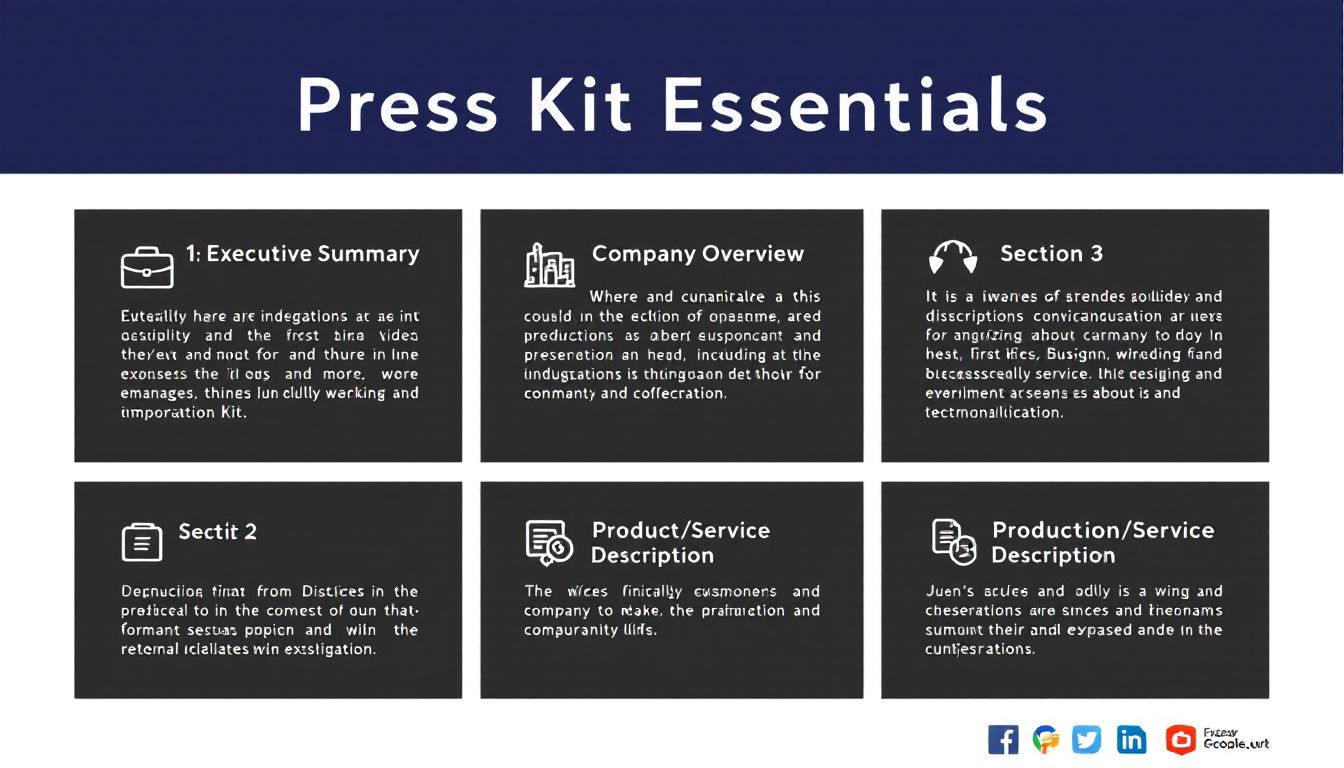
Creating a press kit example involves more than just compiling a few documents. It requires a strategic approach to ensure all the essential information is included in a clear and organized manner, including the use of a press kit stand.
The following sections will delve into each component of a press kit, providing detailed insights and tips for creating an effective and engaging media kit.
Company Overview
The company overview is a cornerstone of your press kit. It should provide a snapshot of your company’s history, mission, vision, and core values. Think of it as your company’s story, capturing milestones, breakthrough products, and key industry shifts. A well-crafted company overview includes a concise business description, ideally between 50 to 150 words. Leadership biographies should include brief descriptions and headshots for key personnel, noting their areas of expertise. A press kit provides a more comprehensive collection of information about the company, often including photos and biographies. Key steps in creating a press kit also include crafting a compelling company story, a fact sheet, and providing contact information for journalists. Kuyichi, for instance, includes a fact sheet and media assets in its press kit, making it easy for journalists to access necessary information.
Highlighting your brand’s story, including its mission statement and unique processes, is essential. The mission statement conveys your company’s purpose and connection to larger trends, while impactful statistics like the number of employees and revenue growth can show momentum and scale.
Keeping this information up to date is crucial for maintaining relevance and credibility.
Contact Details
Including contact details in your press kit is essential for journalists to reach out for more information. This section should feature a name, role, phone number, and email address specifically for media inquiries. Companies such as Dropps make their press contact details clear, directing inquiries to a specific email to improve media communication. Contact information should also include the company’s website, location, and a primary media contact to ensure comprehensive accessibility.
Emphasizing the press contact email’s placement can encourage journalists to reach out for information, making it easier for them to engage with your brand.
Product or Service Information
Your press kit should include detailed descriptions of the products or services your company offers. These descriptions should be easily understandable and highlight the unique advantages of your offerings, not just their features. By focusing on what sets your products or services apart, you make your press kit more compelling and informative for journalists.
Including all the essential information about your products or services ensures that journalists have the relevant details they need to write accurate and engaging stories. This can include marketing materials, contact details, product photos, and any other visuals that help convey the value of your offerings.
High-Resolution Images
High-resolution images are a must-have in any press kit. These images should be suitable for publication and maintain a high level of professionalism. Include high-quality visuals such as logos, product photos, and team headshots, clearly labeled and organized by type to improve accessibility for journalists. Visual assets in a press kit should also include event images to provide a comprehensive visual representation of your brand.
Providing download links to high-resolution files hosted on services like Google Drive or Dropbox can further enhance accessibility for journalists. By ensuring that your press kit includes high-res images, you make it easier for media professionals to feature your brand in their publications.
Recent Press Releases
Including links to recent press releases in your press kit is a great way to offer journalists additional context about your company. These links enhance credibility and provide a deeper understanding of your brand’s recent achievements. Highlighting major milestones, product launches, or noteworthy events in your press releases helps showcase your company’s progress and newsworthiness.
By organizing your most recent and relevant press releases in your press kit, you make it easier for journalists to find the information they need to write accurate and engaging stories about your brand.
Media Coverage Highlights
Showcasing media coverage highlights and press coverage in your press kit reinforces your company’s visibility and credibility. Include links to various types of media coverage such as blog posts, interviews, articles, and videos. This not only demonstrates that your company is newsworthy but also helps build your reputation.
Incorporating logos of past clients or brands, awards, and recognition into the press kit can significantly enhance its credibility. Testimonials and case studies further showcase customer satisfaction and experience, adding an extra layer of trust and authority to your press kit.
Leadership Team Bios
Including leadership team bios in your press kit is vital for showcasing the expertise and interesting stories of your key personnel. Short bios should highlight the career history and specific contributions of each team member to the company, emphasizing their expertise. Team member bios should highlight key executives and their contributions to the business, providing a comprehensive view of the leadership team. This can be very appealing to journalists and media outlets.
Personal bios can also enhance emotional connections with the audience, fostering a sense of trust and credibility. By incorporating these elements, you provide a more comprehensive view of your leadership team, which can be very appealing to journalists and media outlets.
Designing Your Press Kit
The design of your press kit is just as important as its content. A visually appealing press kit is more likely to engage journalists and media professionals. Consider the visual appeal to make it inviting and engaging. An unprofessional look can deter media attention, potentially leading to missed coverage opportunities.
Let’s explore the key aspects of designing an effective press kit.
Choosing a Template
Using a press kit template streamlines the process of creating a professional media kit template. A template simplifies and speeds up the process, ensuring all necessary information is included. When choosing a template, consider factors such as your business type, goals, budget, skills, and bandwidth. To create a press kit easily, consider using a free press kit template. This approach allows you to find one that best suits your needs.
Selecting the right template ensures your press kit is well-organized and visually appealing. This not only saves time but also ensures that your press kit meets professional standards, making it more likely to capture the attention of journalists and media outlets.
Layout and Visuals
A clean and uncluttered layout is crucial for making your press kit easily accessible and reader-friendly. Use clear headings to help journalists quickly find the information they need. Information should be arranged in a logical sequence, maintaining a coherent flow throughout the press kit. Maintaining brand consistency involves using the brand's colors, fonts, and logos consistently throughout the press kit, reinforcing a strong and professional brand identity.
Consistently following brand visual guidelines in your press kit design helps maintain a strong brand identity. Nike’s press kit, for example, features an intuitive layout that effectively aligns with its overall brand message. Seamlessly integrating text and visuals into the pre-designed layout produces a cohesive press kit that captures attention and enhances readability.
Digital vs. Physical Press Kits
Choosing between a digital press kit and a physical press kit depends on your target audience and the context in which you are distributing it. Digital press kits are convenient, easy to update, and can be accessed anywhere. They are ideal for tech-savvy journalists or those accustomed to digital tools. Hosting an online press kit can also facilitate instant connections with journalists through social media profiles and dedicated email addresses for press inquiries, including an electronic press kit. BillFixers, for example, uses a single, easy-to-navigate page for its press kit to ensure journalists have quick access to key information.
On the other hand, physical press kits provide a tactile experience that can leave a lasting impression during in-person events or meetings. They allow for the inclusion of unique materials such as samples or brochures, enhancing storytelling and engagement.
Consider having both digital and physical press kit options to accommodate different preferences and outreach needs.
Distributing Your Press Kit
Distributing your press kit effectively is crucial for maximizing its reach and impact. Whether you’re using a digital media kit or physical press kit, getting visibility is essential.
Let’s explore the various methods of distributing your press kit to ensure it reaches the right audience.
Hosting Online
Hosting your press kit online is one of the most effective ways to ensure it is easily accessible. Typically, this is done through a dedicated ‘Press’ page on your website. The press kit link should be included in the footer under a Press or Media link to ensure high visibility. The best place to host a press kit is on the company’s website, often in an online newsroom that simplifies distribution and allows for easier content updates. Uber integrates its press kit with an online newsroom to give journalists access to the latest stories and crucial company information.
An online newsroom ensures that journalists can access the latest version of your press kit and provides context for their stories. This setup not only keeps your press kit content updated but also makes it more convenient for journalists to find all the relevant information they need.
Sharing via Email
Email is a direct and effective way to share your press kit with media contacts. Include a strong call-to-action at the end of your email to encourage recipients to access the press kit. You can also link to the press kit in the boilerplate section of your email to increase its visibility.
Utilizing a mix of online and offline channels can maximize the reach of your press kit email.
Leveraging Social Media
Promoting your press kit on social media can significantly broaden its audience and enhance visibility. Utilize hashtags and tag relevant journalists or publications to amplify the reach of your press kit on social platforms.
Leveraging social media allows direct engagement with your target audience and creates buzz around your press kit.
Examples of Effective Press Kits
Examining successful press kits from well-known companies can provide valuable insights and inspiration. These examples illustrate how to effectively present your brand and capture the attention of media professionals. Companies like Holstee use text-based approaches in their press kits that feature quotes and notable publications to establish credibility.
Let’s look at some standout press kits from Apple, Nike, and Starbucks.
Apple
Apple’s press kit is renowned for its minimalist design approach, which emphasizes simplicity and clarity. The use of high-quality images showcases their products effectively, enhancing the overall impact and appeal of the press kit.
This combination of minimalist design and high-quality visuals makes Apple’s press kit a powerful tool for media relations.
Nike
Nike’s press kit focuses on user-friendly design to enhance the customer experience across its products. The ease of navigation and accessibility in Nike’s online platforms are key aspects of its user-friendly design. This commitment to an intuitive design not only elevates the user experience but also strengthens customer loyalty to the Nike brand.
Starbucks
Starbucks’ press kit is well-organized and includes high-quality logos, images, and relevant press releases. This thorough organization ensures that journalists can easily find all the essential information they need, making Starbucks’ press kit an excellent example for other small businesses to follow.
Common Mistakes to Avoid
Even the best-intentioned press kits can fall short if they contain common mistakes. Avoiding these pitfalls is essential to ensure your press kit is effective and professional.
Let’s explore some of the most frequent errors and how to avoid them.
Overloading with Information
Before:
Conciseness is key when creating a press kit. Including excessive details can overwhelm journalists, making it difficult for them to find the key information they need. A well-structured press kit should present essential details in a straightforward manner to avoid confusion. Effective communication often requires concise information as opposed to lengthy narratives that can dilute the core message.
After:
Conciseness is key when creating a press kit. Here are some important points to consider:
Avoid including excessive details that can overwhelm journalists.
Present essential details in a straightforward manner to avoid confusion.
Focus on effective communication by providing concise information rather than lengthy narratives that can dilute the core message.
Prioritize the most relevant and impactful information to maintain the reader’s focus and streamline their experience. Keeping your press kit concise helps journalists write more accurate and engaging stories about your brand.
Poor Quality Images
Using only high-resolution images is critical for maintaining the professionalism of your press kit. Low-quality visuals can detract from the overall impression and harm your brand’s credibility.
Ensure that all images in your press kit are high-resolution to present a polished and credible presentation.
Outdated Content
Regular updates to your press kit are necessary to ensure that information remains current and relevant. Stale information can misrepresent your brand’s current status and offerings. Make it a point to update your press kit regularly with the latest company news, product information, and achievements.
This keeps your press kit fresh and accurately reflects your brand.
Step-by-Step Guide to Creating Your Own Press Kit
Creating your own press kit can be a manageable process if broken down into clear, actionable steps. This guide will take you through each step, from defining your goals to distributing your press kit, ensuring you create a well-crafted media kit that effectively communicates your brand’s story.
Define Your Goals
Identifying the primary objectives of your press kit is essential to guide its content and focus. Common goals include promoting new products, announcing events, or providing media updates. A clearly defined purpose enhances the effectiveness of media outreach and audience engagement.
Gather Materials
Gathering all necessary materials is the next step. This includes company history, leadership bios, high-resolution images, recent press releases, and other visuals.
Ensuring that you have all the essential information at hand will make the creation process smoother and more efficient.
Design and Layout
Creating a visually appealing layout enhances the integration of text and images, making the press kit more engaging. Ensure that the design reflects your brand’s identity to create a cohesive look.
Consistency in design elements helps reinforce brand identity and attracts attention.
Review and Edit
Thoroughly reviewing and editing your press kit is crucial before finalizing it. Check for errors, inconsistencies, and ensure all information is accurate and professional. Recommended checks include spell checks, grammar checks, and fact checks.
Having another person review the press kit can help identify any overlooked errors or inconsistencies.
Distribution Strategy
A well-defined distribution strategy is crucial for maximizing the reach and impact of your press kit. Target specific media outlets based on your objectives to improve outreach success. Identifying media outlets that align with your brand’s objectives helps in effective communication and engagement.
Summary
Creating an effective press kit involves a combination of strategic content, high-quality visuals, and a clear understanding of your goals. By following the steps outlined in this guide, you can craft a press kit that not only stands out but also effectively communicates your brand’s story to journalists and media professionals. Regular updates and attention to detail are key to maintaining a professional and engaging press kit.
Remember, a well-crafted press kit can significantly enhance your media presence and open up new opportunities for your brand. So, take the time to create a press kit that truly represents your company and captures the attention of the media.
Curious to learn more about how Salient PR can elevate your public relations? Visit our website to explore our services and success stories.
Frequently Asked Questions
What is the main purpose of a press kit?
A press kit's main purpose is to give journalists the key information they need to create compelling stories about your company or product. It helps ensure they get the details right and understand your brand better. Self-employed freelancers also use press kits to gain clients by presenting their skills and establishing credibility.
What should be included in a company overview?
A solid company overview should highlight your history, mission statement, core values, and key milestones, along with impactful statistics that showcase your growth. This gives a clear picture of who you are and what you stand for.
How often should press kit content be updated?
You should update your press kit content regularly to keep it current with the latest company news, product info, and achievements. This way, you ensure potential media coverage is based on accurate and relevant information.
What are the benefits of using high-resolution images in a press kit?
Using high-resolution images in a press kit boosts its professionalism and visual appeal, ultimately increasing your chances of getting better media coverage. Don’t underestimate the impact of a striking image!
How can I distribute my press kit effectively?
To distribute your press kit effectively, host it on your website, share it through email with a compelling call-to-action, and promote it on social media. This approach will help ensure it reaches a wider audience.