
Understanding the Best Structure of Public Relations Agency
Ever wondered how a public relations agency operates behind the scenes? Understanding the Structure of Public Relations Agency reveals the critical roles, teams, and hierarchies that drive successful PR campaigns. This article unveils these aspects, offering insights into the inner workings of a PR agency.
Key Takeaways
Key roles in a PR agency, from interns to Vice Presidents, are essential for effective client relationship management and campaign execution.
Agency Directors oversee multiple departments and client services, ensuring smooth coordination and alignment with agency goals.
A clear organizational structure enhances client satisfaction, streamlines operations, and fosters career growth within PR agencies.
Emerging trends such as technology integration, remote work models, and evolving client expectations are shaping the future of PR agency structures.
Key Roles in a PR Agency

Roles in a PR agency encompass a wide range of responsibilities, each crucial to the smooth execution of campaigns and client relationship management. From interns to Vice Presidents, every position is integral to the agency’s success. Account Executives manage client accounts and handle daily communications, ensuring that client needs are met effectively. Mid-level roles include Account Executive, Senior Account Executive, and Account Manager, each contributing to the agency's operational and strategic goals. Other key roles include communications managers and crisis communications specialists, who bring expertise to specific areas of public relations.
Understanding these roles clarifies career paths and emphasizes the collaboration needed for impactful PR campaigns.
Intern
Interns in a PR agency support day-to-day tasks such as media monitoring, drafting press releases, and assisting with event planning. This hands-on experience offers invaluable insights into the industry and helps assess one’s fit within the organization.
Successful interns often transition to full-time positions, making this entry level position a vital stepping stone in a PR career. Entry-level roles in PR also include Account Coordinator and Assistant Account Executive, which provide foundational experience and opportunities for growth within the agency.
Account Coordinator
Account Coordinators serve as the backbone of client communications, handling tasks like writing press releases, media monitoring, and supporting senior team members. They ensure smooth operation of client accounts and maintain the flow of information between the agency and clients.
Effective management of these tasks by Account Coordinators helps lay strong foundations for successful PR campaigns.
Account Executive
Account Executives are key to client relationships, responsible for building connections, drafting press releases, and creating media releases. They usually hold their positions for one to three years, refining skills in media relations and client management. Additionally, they play a vital role in building relationships with journalists, ensuring effective media outreach and coverage for clients.
Their role ensures the client’s message reaches the target audience, driving the success of PR campaigns.
Senior Account Executive
Senior Account Executives take on a strategic role, overseeing client accounts and ensuring deliverables meet client needs. They lead PR campaigns, coordinate teams, set objectives, and measure effectiveness, directly influencing client satisfaction and agency success. Account Directors, as the primary point of contact for clients, develop strategies and coordinate campaigns, ensuring alignment with client goals and expectations. Vice Presidents or Executive Directors manage daily operations and oversee key accounts, playing a pivotal role in the agency's overall success.
Fostering strong client relationships and managing complex projects, Senior Account Executives play a key role in driving the agency’s success.
Vice President
Account Coordinators serve as the backbone of client communications, handling tasks like writing press releases, media monitoring, and supporting senior team members. They ensure smooth operation of client accounts and maintain the flow of information between the agency and clients. As an entry-level role, Account Coordinators are also responsible for administrative tasks and providing essential support to account executives.
Their role shapes the agency’s approach and ensures its growth, making them indispensable to the leadership team.
Organizational Structure of PR Agencies
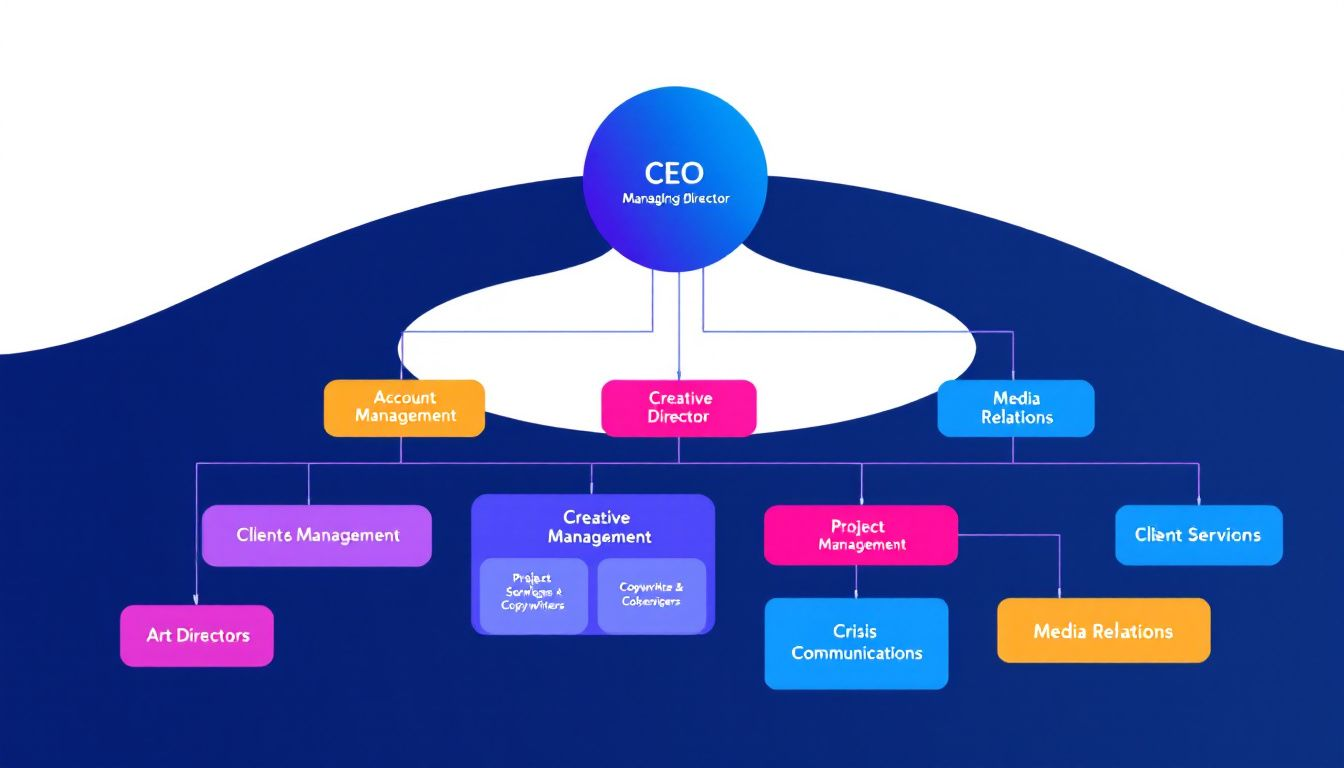
A PR agency’s organizational structure is meticulously designed to optimize client service and campaign management. Often hierarchical, it features clear roles and responsibilities facilitating high-quality client services and efficient PR strategy execution. Departments such as Client Services, Media Relations, Creative, and Digital are integral to this structure, ensuring specialized focus and expertise in each area. Additionally, the Research and Analytics team gathers data on public opinion and media trends to inform PR strategy and measure success.
Effective team dynamics and collaboration within this framework enhance productivity and client satisfaction.
Client Services Team
The Client Services Team navigates complex client relationships and shapes campaign strategies. Senior Account Executives and other team members establish relationships, facilitate meetings, and prepare clients for interviews. They also help win new business and create tailored strategic plans for each client. This team is also responsible for developing overarching PR strategies and managing client relationships, ensuring alignment with client goals and expectations. Additionally, the Research & Analytics team conducts market research and analyzes campaign performance metrics to refine strategies and measure success.
By using the latest PR and communication tools, the Client Services Team effectively meets client needs.
Media Relations Team
The Media Relations Team develops and nurtures relationships with journalists and media outlets, crucial for securing press coverage and ensuring clients’ stories reach the right audience, including community relations. Complementing this, the Creative/Content Creation team crafts narratives and materials for PR campaigns, ensuring that messaging is both compelling and aligned with client objectives. Media Relations also secures earned media coverage by pitching stories and handling media inquiries, which is vital for amplifying client visibility. Additionally, the Events & Experiential Marketing team specializes in planning events to create engagement, offering clients unique opportunities to connect with their audiences.
Account Executives in this team craft content strategies tailored to client needs, enhancing media outreach and engagement effectiveness.
Digital Marketing Team
In the digital age, the Digital Marketing Team manages online reputations and executes content marketing strategies. They enhance the agency’s digital marketing capabilities through social media management, content creation, and AI-driven data analysis. Additionally, this team oversees community engagement and digital marketing campaigns, ensuring a cohesive and impactful online presence for clients.
Using data analytics, the Digital Marketing Team fine-tunes strategies to understand market trends and audience behavior, improving PR effectiveness.
Crisis Communications Team
The Crisis Communications Team manages reputation threats and develops strategies for handling PR crises. They craft effective messaging, coordinate responses, and implement strategies to minimize reputational damage.
These strategies are crucial for maintaining public trust during and after a crisis, making the team essential in any PR agency.
Types of PR Agencies
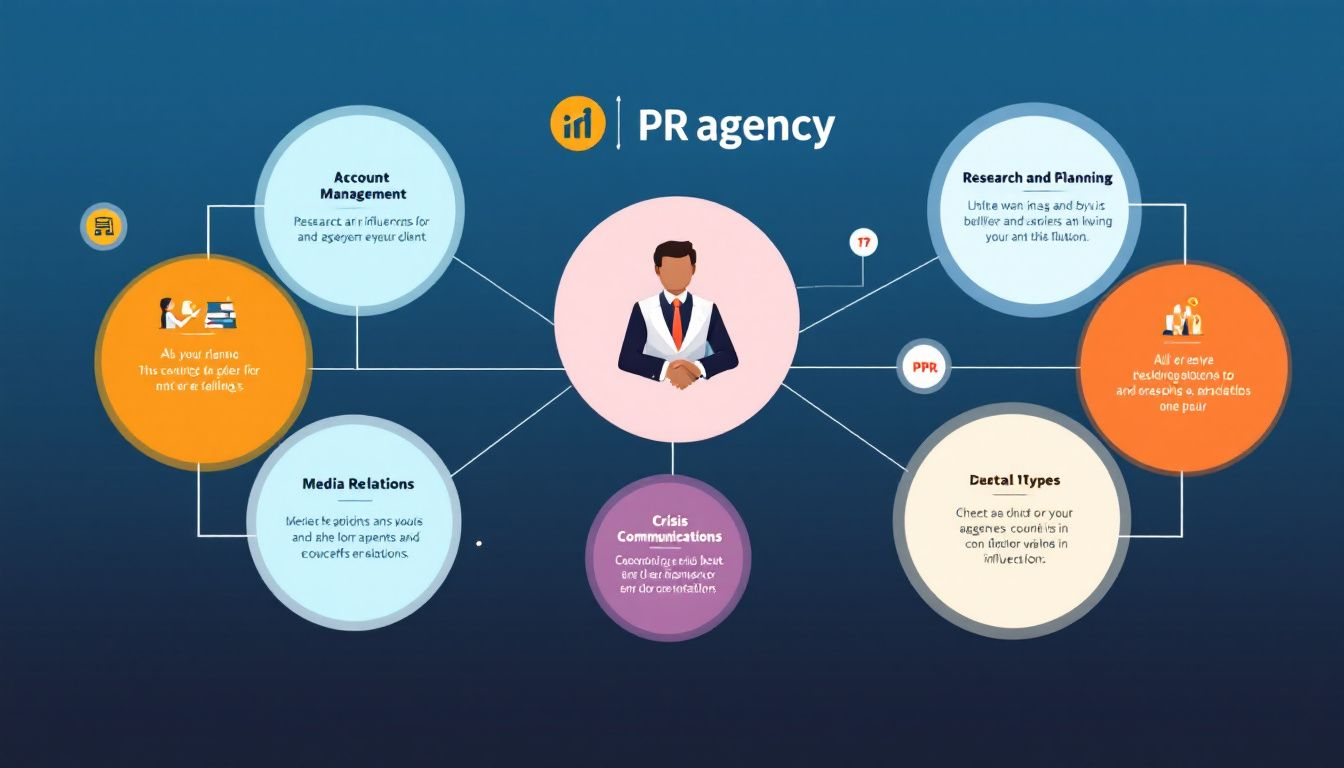
PR agencies vary in form, each with unique characteristics and services. From full-service agencies to boutique firms and in-house departments, the type of PR agency significantly influences PR activities’ scope and approach. A typical PR agency is structured in a hierarchical format to manage diverse client needs effectively, ensuring that each level of the organization contributes to the overall success. Many PR agencies also operate under a holding company structure, which can include multiple firms across different fields, providing a broader range of services and expertise.
Understanding these differences helps identify the best fit for specific client needs and industry requirements.
Full-Service PR Agencies
Full-service PR agencies offer comprehensive services, including media relations, media training, crisis management, content creation, and event planning. They provide integrated services across various marketing channels, ensuring clients receive broad and cohesive PR support.
Tailoring services to meet unique client needs, full-service PR agencies can effectively communicate and create impactful campaigns.
Boutique PR Agencies
Boutique PR agencies specialize in niche markets, providing personalized strategies that align closely with clients’ unique needs. These smaller firms focus on specific industries or expertise, allowing for deeper client relationships and more tailored services. Concentrating on niche markets, boutique PR agencies offer specialized knowledge and customized PR solutions that larger agencies might overlook.
In-House PR Departments
In-house PR departments are embedded within companies, offering closer alignment with company goals and a deep understanding of the brand’s identity. While they may lack the diverse perspectives of external agencies, in-house teams provide more integrated and consistent PR support. This alignment helps create cohesive communication strategies that resonate with the company’s overall objectives.
Importance of PR Agency Structure
A well-defined PR agency structure is crucial for operational efficiency and project success. Clear roles and responsibilities prevent confusion, enhance productivity, and support effective decision-making. The leadership structure in a PR agency typically follows a clear chain of command, ensuring smooth project management and accountability.
As PR agencies adapt to changing client engagement methods and media landscapes, their organizational structures evolve to meet these new demands.
Enhancing Client Relationships
A structured approach improves client satisfaction by ensuring timely communication and project delivery. Well-defined roles facilitate a better understanding of client requirements and expectations, allowing PR agencies to provide thought leadership and strategic insights.
Modern clients increasingly view PR agencies as strategic partners that contribute to their business goals.
Streamlining Operations
Clarity in roles and a structured organization foster better collaboration among departments, streamline operations, and meet client demands for transparency and real-time updates. The need for quick, creative campaigns highlights the importance of efficiency in PR services.
Tools like Trello and Asana support advanced project management and team collaboration, especially for remote work.
Fostering Career Growth
A clear agency structure supports career development, aiding employee retention and motivation for professional growth. Defined career paths and ongoing training help PR professionals stay updated with industry trends and best practices. Skill enhancement in public speaking and media interaction prepares team members for future challenges and opportunities. Public relations professionals need to be all-rounders with expertise in research, writing, creativity, and communications, ensuring they can adapt to the diverse demands of the industry.
Building a Successful PR Agency Team
Assembling a talented and diverse team is crucial for creativity and problem-solving in PR strategies. A diverse team brings various perspectives, leading to better client services and innovative solutions.
Essential skills for PR professionals include strong communication, strategic thinking, and team leadership, vital for effective PR campaigns.
Recruiting PR Professionals
Recruiting experts in public relations, marketing, and communications is vital for building a successful PR agency team. Platforms like LinkedIn, Indeed, Upwork, and Fiverr can help find skilled PR professionals.
Networking at industry events and online webinars also offers valuable recruitment opportunities.
Training and Development
Continuous training and development are essential for employees to keep up with industry trends and enhance their skills. Different roles within the agency, such as interns and Account Coordinators, offer various levels of training. Defined career paths foster professional growth, and recruiting skilled PR professionals strengthens training initiatives.
Team Collaboration Tools
Effective team collaboration is crucial for the success of anyPR agency. Tools like Slack, OpenPhone, and Notion facilitate seamless communication and project management, especially for remote work. These tools support real-time collaboration and help maintain team cohesion, enabling efficient PR strategy execution.
Leveraging such technologies ensures that PR agency teams remain connected and productive, regardless of location.
Future Trends in PR Agency Structures
The landscape of PR agencies is continuously evolving, influenced by technological advancements and changing market demands. The integration of advanced technology, including AI, reshapes how agencies engage with clients and manage campaigns. Creating a business plan is a crucial step in starting a public relations agency, as it lays the foundation for strategic growth and operational success. Conducting market research on other public relations agencies is essential before starting your own agency, as it helps identify gaps in the market and refine your service offerings. Starting a public relations agency requires an investment of countless hours and involves various tasks, from building a client base to establishing operational workflows. Understanding the financial aspects of starting a PR agency is crucial for budgeting and ensuring long-term sustainability.
Emerging trends require PR professionals to adapt to new roles and skills, ensuring agencies remain relevant and effective in a fast-paced industry.
Integration of Technology
The integration of technology, particularly AI and data analytics, transforms PR practices and improves agency organization. Tools like Mention and other media monitoring technologies help track client mentions and measure PR efforts’ impact. These technologies aid in understanding brand sentiment, crafting effective communication strategies, and enhancing overall PR campaign effectiveness.
Remote Work Models
The shift towards remote work has significantly impacted PR agency structures and team dynamics. Tools like Zoom facilitate direct communication and brainstorming sessions, crucial for collaboration in remote PR teams. This new work model requires agencies to adopt flexible and innovative approaches to keep team members engaged and productive, regardless of location.
Evolving Client Expectations
Clients’ preferences for personalized and immediate communication are reshaping expectations in the public relations industry. They now seek measurable results and accountability, driving agencies to adopt integrated marketing communications and agile methodologies.
The demand for swift responses in crisis situations and the need for specialized teams reflect evolving client expectations, compelling PR agencies to become more adaptable and specialized.
Summary
In conclusion, understanding the structure of a PR agency is essential for navigating the complex world of public relations. From key roles and organizational frameworks to the types of PR agencies and emerging trends, each aspect plays a crucial role in the success of PR campaigns. A well-defined structure enhances client relationships, streamlines operations, and fosters career growth, ensuring that PR agencies can effectively meet the evolving demands of the industry. As technology continues to advance and client expectations shift, PR agencies must remain adaptable and innovative to thrive in this dynamic field. The CEO or President is responsible for the agency's overall vision and strategy, ensuring alignment with long-term goals. Executive Leadership also includes roles such as Chief Communications Officer, who contributes to strategic decision-making and agency direction. Legal and financial considerations are necessary when launching a public relations agency, as they ensure compliance and provide a stable foundation for growth.
Curious to learn more about how Salient PR can elevate your public relations? Visit our website to explore our services and success stories.
Frequently Asked Questions
What are the key roles in a PR agency?
Key roles in a PR agency encompass Interns, Account Coordinators, Account Executives, Senior Account Executives, and Vice Presidents, each playing a vital part in achieving the agency's overall goals. These positions work collaboratively to enhance client relationships and drive successful communication strategies. Public relations agencies typically have a hierarchical organizational structure that includes entry-level positions, mid-level roles, and senior management, ensuring clear career progression and operational efficiency. Most PR agencies group employees into specialized teams based on function for PR service delivery.
How is the organizational structure of a PR agency designed?
The organizational structure of a PR agency is designed to optimize client service and effective campaign management by establishing clear roles, responsibilities, and a hierarchical framework. This ensures that each team member contributes efficiently to achieving client goals.
What are the different types of PR agencies?
There are several types of PR agencies, including full-service PR agencies, boutique agencies, and in-house PR departments, each catering to different client needs with specialized service offerings. Understanding these distinctions can help you choose the right fit for your organization's goals.
Why is a well-defined PR agency structure important?
A well-defined PR agency structure is crucial for operational efficiency and improving client relationships. It also streamlines operations and supports career growth within the team.
What future trends are influencing PR agency structures?
Future trends in PR agency structures are driven by advanced technology integration, remote work models, and the need for personalized and immediate communication to meet evolving client expectations. Embracing these changes is essential for agencies to stay relevant and competitive. PR professionals face real-world challenges daily as they work with diverse clients requiring different expertise, making adaptability and problem-solving critical skills in the industry.