
Understanding Public Relations or Advertising: Key Differences and Benefits
Are you wondering whether public relations or advertising is better for your business? This article explains the key differences between them and shows how each can benefit your marketing strategy.
Key Takeaways
Public relations (PR) focuses on building long-term relationships and brand credibility, while advertising emphasizes immediate sales through paid promotions.
PR relies on earned media and fosters stakeholder engagement, whereas advertising utilizes paid media for guaranteed visibility and control over messaging.
Integrating PR and advertising can enhance brand messaging, extending audience reach and maximizing the overall impact of marketing efforts.
Understanding Public Relations and Advertising

Public relations and advertising are two pillars of modern marketing, each with its unique approach and objectives. Advertising primarily focuses on generating immediate sales through paid promotions, aiming to influence consumer behavior. This strategy allows advertisers to control the messaging and timing of their campaigns precisely. Public relations, in contrast, focuses on building long-term brand awareness and fostering positive relationships with various stakeholders through earned media. Additionally, PR involves storytelling and engaging with the audience, while advertising typically presents a brand's message in a more straightforward manner.
One of the major distinctions between PR and advertising lies in their media usage. Advertising utilizes paid media, where businesses pay for space or time to showcase their ads, ensuring guaranteed visibility. In contrast, PR relies on earned media, where coverage is gained through press releases, media relations, and other non-paid efforts. This difference significantly impacts the perception and credibility of the message received by the audience.
The timeline for results is another significant difference. Advertising campaigns often produce quicker results, directly boosting sales and visibility in the short term. PR activities, however, unfold over a longer duration, focusing on maintaining a positive public image and reputation. Advertising is most effective for short-term goals, while public relations is more effective for long-term goals. This systematic approach to managing communication and relationships ensures sustained engagement and trust with the target audience. However, PR professionals have less control over the final message compared to advertisers, as earned media depends on how journalists and other stakeholders present the information.
What is Public Relations?
Public relations is a strategic communication process aimed at creating mutually beneficial relationships between organizations and their target audiences. Unlike advertising, which primarily seeks to promote products or services to consumers, PR focuses on building and maintaining relationships with various stakeholders. This involves engaging in meaningful conversations, managing perceptions, and fostering trust and credibility.
At its core, PR is about establishing a positive public image and managing how an organization is perceived by the public.
It encompasses a range of activities designed to communicate effectively with different audiences, including:
customers
employees
investors
the media
Strategically managing these relationships helps businesses build a solid reputation and maintain a favorable standing.
Key PR Activities
Key activities in public relations include managing media relations, coordinating events, and handling crisis communications. Media relations involve strategically sharing planned messages with selected media outlets to promote an organization’s interests. Building strong relationships with journalists is essential for securing coverage and ensuring the organization’s messages reach their intended audience. A successful PR campaign creates a recognizable message across multiple media platforms. PR can also effectively target niche audiences through relationships with industry-specific media and influencers, allowing businesses to connect with highly relevant groups.
Crisis management is another critical aspect of PR, focusing on addressing and mitigating negative events that could impact an organization’s reputation. Utilizing diverse tactics such as press releases and influencer collaborations can enhance the effectiveness of PR strategies. Choosing the right channels for message dissemination is crucial for effectively reaching the desired audience.
Benefits of PR for Businesses
Public relations offers numerous benefits for businesses, primarily by enhancing credibility and building trust with stakeholders. Unlike advertising, which aims to increase visibility, PR focuses on maintaining a positive public image and reputation. A well-executed PR strategy can lead to sustained customer loyalty and long-term success.
Engaging with potential customers through PR efforts fosters a connection that can enhance brand loyalty and attract new clients. Effective PR strategies involve understanding the needs of the target audience and creating impactful messaging that resonates with them. This approach helps businesses establish a solid foundation of trust and credibility, crucial for maintaining a positive public image.
Additionally, PR can be a cost-effective strategy, especially when compared to traditional advertising. Leveraging earned media and focusing on reputation management can yield higher long-term returns for businesses. Engaging with followers on social media can generate positive publicity and enhance brand visibility without the need for a marketing or PR agency. Public relations is generally more cost-effective than advertising, as it often requires fewer financial resources while still delivering significant value through trust-building and credibility enhancement. Aligning marketing data with PR strategies can further enhance the effectiveness of public relations initiatives, ensuring that businesses stay connected with their audience and maintain a favorable public perception.
What is Advertising?

Advertising is a paid form of promotion aimed at influencing consumer behavior through various media channels. This approach involves creating compelling advertisements that inform customers about products or services and drive sales. The creative aspect of advertising is crucial, as it determines how effectively the message is communicated to the target audience.
Unlike PR, which focuses on building relationships, advertising seeks to persuade potential customers quickly and directly. Paid media ensures that ads reach a wide audience, enhancing brand visibility and driving immediate results. Advertising allows a brand to deliver a unified message repeatedly across various platforms, ensuring consistency and reinforcing the brand's identity.
Whether through print, television, or digital mediums, advertising remains a powerful tool for promoting products and services.
Types of Advertising
Advertising can be categorized into various types, including digital and traditional formats. Digital advertising encompasses social media marketing, search engine ads, and online banners, allowing businesses to target specific demographics with precision. Common formats in digital advertising include banner ads, video ads, and native ads, each designed to engage audiences in different ways. Advertising is particularly ideal for promoting specific, time-bound offers or events, ensuring that the message reaches the audience at the right moment.
Traditional advertising, on the other hand, includes television commercials, print advertisements in newspapers and magazines, and product placement in films and TV shows. Each format has its unique advantages, with television ads offering broad reach and print ads providing tangible, lasting impressions.
Choosing the right type of advertising enables businesses to effectively reach their target audience and achieve their marketing goals.
Benefits of Advertising for Businesses
Advertising offers several benefits for businesses, including enhanced brand visibility and immediate positive impacts on sales. Targeting specific audiences allows effective advertising to drive consumer purchasing decisions and achieve marketing goals. This approach helps businesses reach potential customers and promote their products or services efficiently.
Moreover, advertising allows businesses to control their advertising messages and timing precisely. Investing in well-crafted advertising campaigns allows companies to create compelling ads that resonate with their audience and drive sales.
Whether through social media marketing or traditional media, advertising remains a valuable tool for businesses aiming to increase their market presence and achieve their sales objectives.
Comparing Costs: PR vs. Advertising
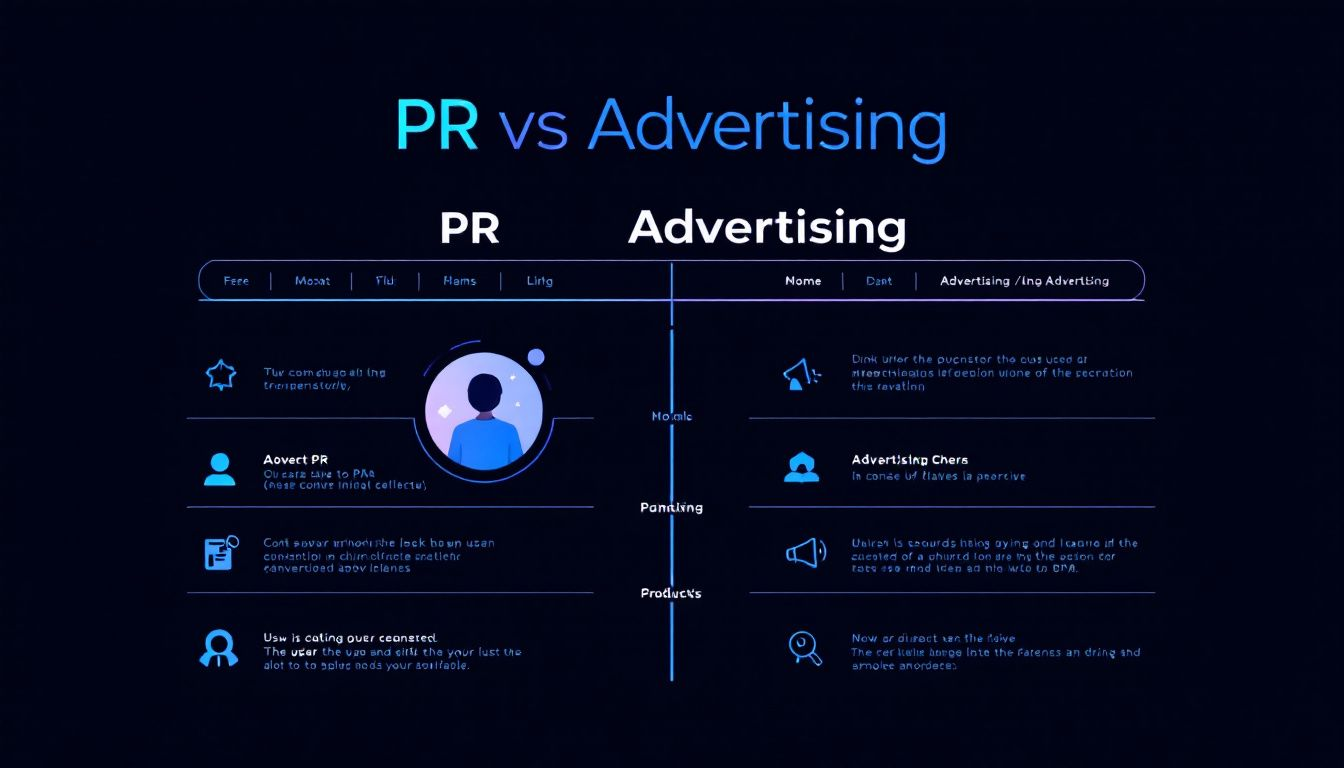
When comparing the costs of PR and advertising, it’s essential to consider the different investments required for each approach. Public relations often involves agency fees, event management expenses, and media outreach efforts, all contributing to building a brand’s positive image. These activities are typically seen as long-term investments in brand credibility and trust.
Advertising costs, on the other hand, generally include expenses for paid promotions, content creation, and marketing tools. These costs can be more adaptable, allowing businesses to allocate budgets based on immediate needs and objectives. The short-term ROI from advertising is frequently higher due to its focus on immediate sales and lead generation.
While PR may require lower financial investment compared to traditional advertising campaigns, its benefits are realized over a longer period. Understanding the cost differences and potential returns enables businesses to make informed decisions about where to allocate their marketing budgets for maximum impact.
Measuring Success: PR vs. Advertising
Measuring success in PR and advertising involves different metrics and approaches. In public relations, success is often gauged by the quality of relationships and public sentiment. Key performance indicators (KPIs) for PR include media mentions, social engagement rates, and brand sentiment analysis. Setting SMART goals—Specific, Measurable, Achievable, Relevant, and Timely—is crucial for effective PR campaign tracking.
Advertising success is typically assessed through metrics like sales figures and return on investment (ROI). Tools such as Google Analytics and brand monitoring services are essential for tracking and reporting advertising campaign results. Setting realistic and specific goals enables businesses to measure the effectiveness of their advertising efforts and make data-driven decisions to optimize their strategies.
The Barcelona Principles provide standardized guidelines for evaluating the effectiveness of PR efforts, ensuring that businesses can track their progress and measure success accurately. By understanding the different methods of measuring success in PR and advertising, companies can better assess their performance and make informed decisions about their marketing strategies.
Integrating PR and Advertising for Maximum Impact
Integrating PR and advertising creates a unified strategy that enhances brand messaging and extends audience reach. Combining the strengths of both approaches allows businesses to streamline resources and improve return on investment. Integrated efforts can lead to innovative campaigns that strengthen brand positioning and create lasting impressions on the target audience.
A well-executed PR campaign can complement advertising efforts by generating media coverage and public interest. For instance, during a product launch or major event, PR activities can build anticipation and excitement, while advertising reinforces the message and drives immediate sales. This synergy ensures sustainable customer engagement and maximizes the impact of marketing efforts.
Integrating PR and advertising enables businesses to create a cohesive and powerful marketing strategy that leverages both trust-building and persuasive messaging. This approach not only enhances brand visibility but also fosters long-term relationships with customers, ensuring continued success and growth.
Choosing the Right Strategy for Your Business
Choosing the right strategy between PR and advertising depends on your business goals and resources. Public relations focuses on creating meaningful relationships and enhancing an organization’s reputation and credibility. This approach is effective for managing public perception and building long-term trust with stakeholders.
Advertising, on the other hand, is geared towards directly influencing sales and increasing brand visibility through paid promotions. It allows businesses to control their messaging and timing, ensuring that their ads reach a wide audience.
Combining PR and advertising can create a more powerful marketing approach, leveraging both trust-building and persuasive messaging to achieve comprehensive marketing goals.
Summary
In summary, public relations and advertising are both essential components of a successful marketing strategy. While PR focuses on building long-term relationships and enhancing credibility, advertising seeks to drive immediate sales and enhance brand visibility. By understanding the key differences and benefits of each approach, businesses can make informed decisions about where to allocate their marketing resources.
Integrating PR and advertising can create a unified strategy that maximizes impact and ensures sustainable growth. By leveraging the strengths of both approaches, businesses can achieve their marketing and branding goals, building a solid foundation for long-term success. Choose the right strategy for your business, and watch your brand thrive in today’s competitive landscape.
Curious to learn more about how Salient PR can elevate your public relations? Visit our website to explore our services and success stories.
Frequently Asked Questions
What is the main difference between public relations and advertising?
The main difference between public relations and advertising is that PR aims to build long-term relationships and credibility through earned media, whereas advertising focuses on generating immediate sales through paid media.
How do you measure the success of a PR campaign?
The success of a PR campaign can be effectively measured through the quality of relationships established, media mentions achieved, social engagement rates, and brand sentiment analysis. These metrics provide a comprehensive view of the campaign's impact and effectiveness.
What are the cost differences between PR and advertising?
PR is generally seen as a long-term investment involving agency fees and media outreach, while advertising incurs immediate costs through paid promotions and content creation, often providing higher short-term returns.
What are some examples of successful PR and advertising campaigns?
Successful PR and advertising campaigns include Auntie Anne's pretzel-scented perfume initiative and Heineken's 'L0ve.L0ve' campaign at the US Open, which exemplify innovative strategies in engaging audiences. These campaigns highlight the effectiveness of creative integration between public relations and advertising efforts.
How can integrating PR and advertising benefit my business?
Integrating PR and advertising enhances brand messaging and expands audience reach, ultimately improving return on investment. This unified strategy effectively combines trust-building with persuasive communication to better serve your business objectives.