
Best Cleantech PR Firms: Top Clean Energy & Renewable PR Agencies
Last reviewed: April 2026
Justin Mauldin | Founder, Salient PR | Justin manages PR strategy and media relations for cleantech, clean energy, and renewable energy clients, working directly with energy journalists and sector-specific outlets daily.
In the rapidly evolving world of renewable energy, finding the right cleantech PR firm can make all the difference in your company's success. With the increasing demand for sustainable solutions, cleantech PR has become a critical component in driving awareness, adoption, and positioning clients as industry leaders in the renewable energy sector. How can you choose the best firm to represent your company? The answer lies in understanding the growing importance of cleantech PR, identifying key components of effective PR services, and evaluating potential PR firms based on their track record, service offerings, and client testimonials.
Key Takeaways
Cleantech PR firms specialize in energy and cleantech public relations to help companies communicate their environmental initiatives.
Professional cleantech PR services rely on industry expertise, customized strategies, and strong media relations for maximum impact.
Evaluating a cleantech PR firm involves considering factors such as services offered, communication style, track record of success, and alignment with company values.
The Growing Importance of Cleantech PR
With the global shift towards renewable energy sources, the cleantech industry is booming. This rapid growth necessitates strategic communication that underscores sustainability and green technology. Cleantech PR assists renewable energy companies in highlighting their dedication to sustainability and environmental responsibility through compelling PR campaigns that engage target audiences.
Cleantech PR firms provide diverse services including PR campaigns, thought leadership, messaging, and strategic green energy PR. Leveraging their industry expertise, these firms can devise a customized cleantech PR strategy that highlights your company's credentials and aligns them with your brand, guaranteeing your message engages the right audiences and propels business expansion.
The Rise of Renewable Energy
Renewable energy, including energy storage solutions, has experienced significant growth and adoption over the past decade, and this trend is expected to continue as the world moves away from fossil fuels. As a result, there is a growing need for specialized renewable energy PR services that can help companies demonstrate their commitment to sustainability and environmental responsibility.
To address the unique challenges faced by renewable energy companies, such as intermittent energy sources and political challenges, PR firms must develop effective strategies that resonate with informed audiences and drive business growth.
Sustainability and Green Technology
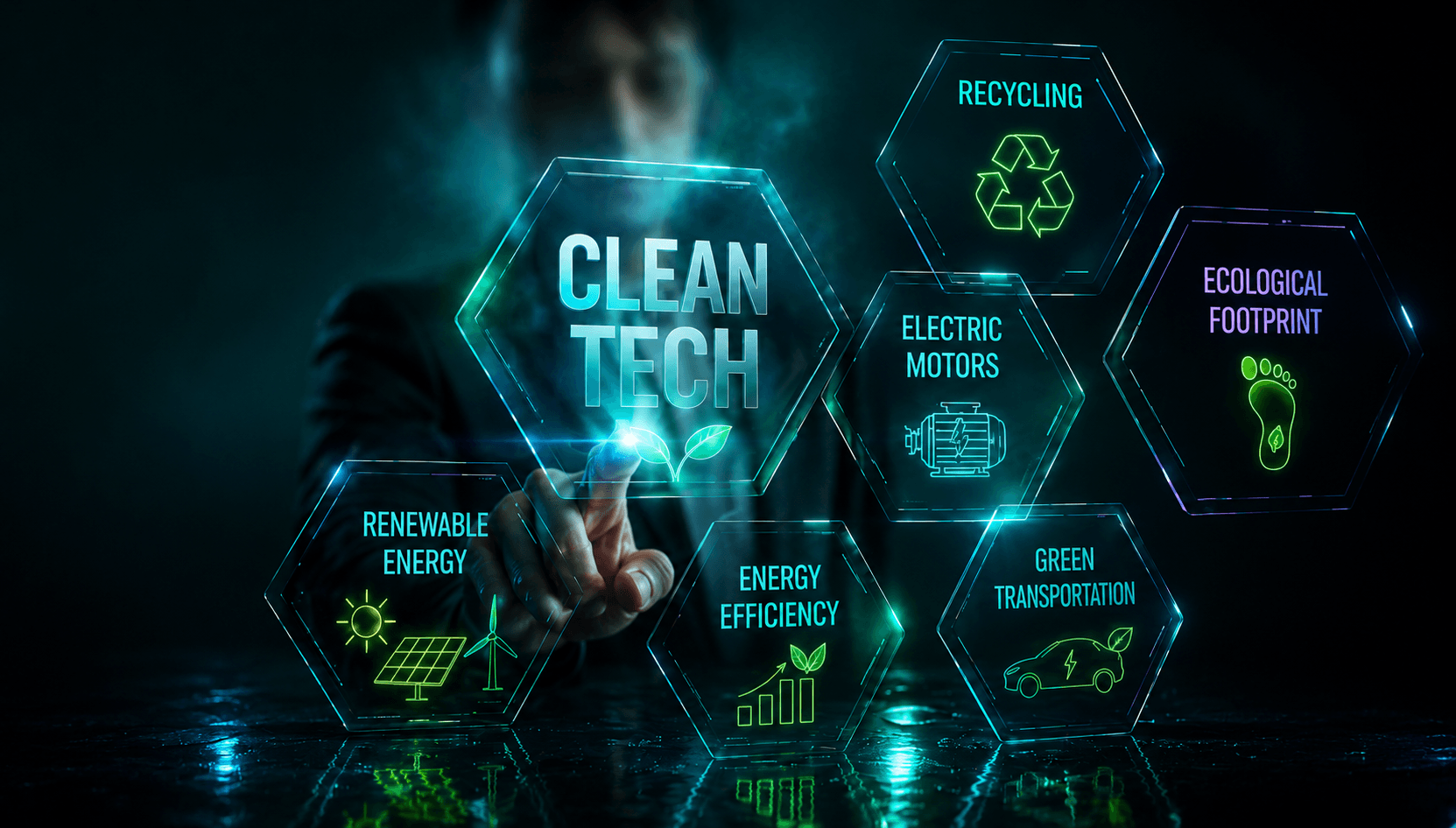
The increasing focus on sustainability and clean energy is creating new business opportunities for cleantech PR firms to help companies effectively communicate their environmental initiatives and achievements. Clean technology is an umbrella term that encompasses any process, product, or service which reduces negative environmental impacts. This includes actions such as significant energy efficiency improvements, sustainable resource use, and environmental protection activities.
Cleantech PR firms can develop comprehensive communication strategies that share insights across sectors, establish an authoritative voice, avoid greenwashing, and master effective communication tactics specific to the cleantech industry. This specialized expertise enables cleantech PR firms to partner with renewable energy marketing agencies and specialize in energy and cleantech public relations, ensuring their clients' messages reach the right audiences and drive positive environmental change.
Clean Energy PR Agencies
As clean energy becomes the dominant growth sector in global infrastructure investment, a distinct category of communications professionals has emerged: the clean energy PR agency. These firms go beyond general technology or sustainability PR to specialize in the nuanced regulatory, scientific, and financial landscape that defines solar, wind, battery storage, EV, and grid-scale energy projects.
What Makes a Clean Energy PR Agency Different
Clean energy public relations requires fluency in policy as much as it requires media relationships. A firm working with a solar developer, for example, needs to understand net metering policy debates, interconnection queue backlogs, and IRA tax credit structures, not just be able to write a press release. The same applies across every clean energy vertical.
Effective clean energy PR agencies typically cover the following areas of specialization.
Solar PR encompasses project announcement strategies, community engagement for utility-scale development, rooftop market communications, and manufacturing supply chain narratives. Solar is a heavily scrutinized sector with active opposition in many markets, making crisis readiness a core competency for any agency working in this space.
Wind energy PR requires an understanding of both onshore permitting battles and the emerging complexity of offshore wind development. Offshore wind in particular involves federal leasing, Jones Act considerations, and multi-stakeholder community processes that demand experienced communications support.
Battery storage and grid-scale energy PR is one of the fastest-growing areas of clean energy communications. As standalone storage projects proliferate and co-located solar-plus-storage becomes standard, PR firms must be able to explain long-duration storage, capacity markets, and grid services to audiences ranging from utility executives to local planning boards.
EV and charging infrastructure PR sits at the intersection of automotive, energy, and real estate communications. Firms in this space manage OEM narratives, fleet electrification announcements, charging network expansions, and the policy environment around EV incentives and grid integration.
Hydrogen PR is an emerging and contested space. A clean energy PR agency working with hydrogen clients must navigate ongoing debates about green versus blue hydrogen, the economics of electrolysis, and international trade dynamics, all while communicating to audiences with widely varying levels of technical familiarity.
When evaluating a clean energy PR agency, ask specifically about their experience in your vertical, their relationships with energy reporters at outlets like E&E News, Canary Media, Utility Dive, and Greentech Media, and their track record navigating community opposition.
Renewable Energy PR: What the Right Firm Covers
Renewable energy PR and cleantech PR are often used interchangeably, but there are meaningful distinctions. Renewable energy PR tends to focus on energy generation and infrastructure, while cleantech is a broader category that includes industrial decarbonization, water technology, sustainable agriculture, and advanced materials. For energy companies, renewable energy PR firms are the more targeted choice.
Wind Energy PR
Wind energy projects face some of the longest development timelines in the energy sector, often spanning eight to twelve years from site assessment to commercial operation. PR support across that timeline looks very different depending on the stage. Early-stage wind energy PR focuses on community education and stakeholder engagement. Construction-phase PR emphasizes local economic impact, job creation, and project milestones. Operations-phase PR shifts to performance data, environmental monitoring results, and community benefit fund announcements.
Solar PR
Solar is now the fastest-growing electricity source in the United States, and PR firms working in this space must be able to move at the pace of the market. Solar PR campaigns increasingly need to address land use concerns, biodiversity co-location, agricultural compatibility, and the realities of a domestic manufacturing supply chain that is still scaling up.
Hydrogen PR
Green hydrogen is a priority technology under both the EU Green Deal and U.S. Department of Energy investment programs, but public understanding remains low and skepticism from environmental groups is high. Effective hydrogen PR requires the ability to communicate electrolyzer technology, levelized cost trajectories, and end-use applications in a way that is credible to both technical and non-technical audiences.
Sustainable Infrastructure Communications
Beyond generation, renewable energy PR increasingly encompasses the infrastructure required to move and manage clean power. Transmission development, grid modernization, and distributed energy resources all require communications support as these projects face permitting challenges and public scrutiny that rival generation projects in complexity.
Key Components of Effective Cleantech PR Services
Successful cleantech PR services are built on three key components: industry expertise, customized PR strategies, and strong media relations. These elements ensure that cleantech businesses can effectively communicate their value proposition, build credibility, and enhance their reputation in the industry.
Industry Expertise
Industry knowledge is paramount in cleantech PR. It allows PR professionals to comprehend the industry, its difficulties, and its movements, and to communicate the distinct value proposition of a cleantech company to the intended audience, comprising investors, policymakers, and the public. Cleantech PR firms with comprehensive knowledge of the sector demonstrate credibility, develop tailored messaging, facilitate stakeholder connections, and implement effective crisis management. This expertise allows cleantech PR firms to position their clients as thought leaders and experts in the field, enhancing their credibility and visibility within the sector.
Customized PR Strategies
Effective cleantech PR campaigns require tailored strategies that address the specific needs and goals of each client. A well-crafted PR campaign can help cleantech businesses build brand awareness, attract investors, and establish themselves in the market. By employing customized PR strategies, such as garnering media attention, participating in events, formulating thought leadership, disseminating formal announcements, and providing educational content, cleantech PR firms can ensure that their campaigns resonate with target audiences and achieve the desired results.
Media Relations and Thought Leadership
Media relations and thought leadership play a crucial role in the success of cleantech PR campaigns. Establishing positive relationships with the media, obtaining media coverage, and swaying public opinion are essential for enhancing brand visibility and driving growth opportunities. Thought leadership helps create a dialogue surrounding a brand or business, capturing the audience's interest in a two-way communication channel. Well-crafted PR campaigns can help establish thought leadership in the cleantech sector, positioning companies as trusted authorities in the industry.
Cleantech PR Strategy: Building a Framework That Works
A cleantech PR strategy is not a media list and a press release calendar. For companies operating in technically complex, heavily regulated, and politically contested markets, the strategic layer is what separates firms that generate noise from firms that move audiences. The following framework covers the core elements of a high-performing cleantech PR strategy in 2026.
Messaging Frameworks for Complex Technology
The core challenge in cleantech communications is translating technical differentiation into language that resonates with non-technical audiences without losing credibility with technical ones. This requires building layered messaging architectures that can be adapted by audience tier: a utility executive needs a different message than a city council member, a climate journalist, or a retail investor.
Effective cleantech messaging frameworks start with a defensible claim, build to a proof point that substantiates it, and close with a relevance statement that connects the technology to something the audience already cares about. Firms that skip the proof point layer create messaging that reads like marketing. Firms that skip the relevance layer create messaging that only engineers find interesting.
Regulatory and Policy Communications
The policy environment for clean energy in 2026 is defined by the implementation of Inflation Reduction Act provisions, evolving SEC climate disclosure requirements, and the EU Green Deal's Corporate Sustainability Reporting Directive. PR firms working with cleantech companies must be able to communicate how their clients benefit from, comply with, or contribute to these frameworks without making claims that outrun the legal or regulatory reality.
This requires coordination between communications teams and legal and policy counsel. The PR firm that operates in a vacuum from these functions is a liability, not an asset.
ESG Narrative Building
ESG communications in the cleantech sector require particular care. Investors, regulators, and advocacy groups are all scrutinizing ESG claims with increasing sophistication. A cleantech PR firm building an ESG narrative must work from audited data, align messaging with recognized frameworks such as TCFD or GRI, and avoid the kind of forward-looking language that creates regulatory exposure.
The best ESG narratives in cleantech are built around verified outcomes, not aspirational commitments. Firms that lead with net-zero pledges without substantive interim milestones have learned, often painfully, that the gap between commitment and credibility is where reputations break down.
Green Claims Compliance and Avoiding Greenwashing
Greenwashing accusations have ended careers and triggered regulatory enforcement actions. In 2026, with the FTC Green Guides under revision and the EU anti-greenwashing directive in implementation, the stakes for imprecise environmental claims are higher than ever. A competent cleantech PR firm will have a green claims review process that applies the same scrutiny to a tweet as to a white paper.
The core test is simple: can the claim be substantiated with third-party verifiable evidence? If the answer is no, the claim should not be made. PR firms that push clients to make aspirational claims because they sound better are not acting in their clients' interests.
Climate Disclosure Communications
Public companies with significant climate exposure now face mandatory disclosure requirements in multiple jurisdictions. The communications function has a role to play in ensuring that required disclosures are accurate, consistent with public messaging, and positioned strategically where permitted. PR firms supporting publicly traded cleantech companies should have a clear process for reviewing disclosure documents as communications materials, not just legal ones.
Cleantech Brand Awareness and Positioning
Brand awareness in the cleantech sector presents a specific challenge: the companies with the most important technologies are often the hardest to explain. Deep tech decarbonization companies, industrial heat electrification providers, and carbon removal platforms are all operating at the frontier of what is technically possible, which means their brand communications must work harder than those of companies in more familiar categories.
Brand Positioning for Deep Tech Cleantech
Effective brand positioning for deep tech cleantech companies starts with a decision about primary audience. A company that positions itself primarily for investor audiences will build different brand assets and use different language than one that positions primarily for utility or industrial customers. Many companies try to do both simultaneously and end up with positioning that resonates with neither audience.
The most effective positioning frameworks for deep tech cleantech companies anchor the brand to a specific problem, make a specific claim about how the technology solves it, and build from there. Generic claims about sustainability or decarbonization contribute nothing to positioning. Specific claims about cost, performance, or scalability create differentiation.
Simplifying Complex Climate Technology Narratives
The public communication of complex climate technology requires a commitment to clarity that many technically oriented companies find uncomfortable. Engineers and scientists are trained to qualify every claim, acknowledge uncertainty, and avoid overstatement. These instincts are correct in a technical context but counterproductive in a public communications context, where nuance is often perceived as evasiveness and qualifications undermine credibility.
Effective cleantech communicators learn to find the plain language version of a technical claim without distorting it. This is a skill that takes time to develop and that most in-house teams lack without external support.
Building Credibility with Non-Technical Audiences
Third-party validation is the most efficient way to build credibility with non-technical audiences. This includes earned media coverage in general-interest outlets, endorsements from credible environmental organizations, government partnerships, and analyst coverage from firms like Wood Mackenzie, BloombergNEF, or Rocky Mountain Institute. A cleantech PR firm's ability to secure these forms of third-party validation is a direct indicator of their network quality and strategic capability.
Content Marketing and Thought Leadership in Cleantech
Content marketing in the cleantech sector is underutilized by most companies and misunderstood by most PR firms. The opportunity is significant: cleantech buyers, investors, and policymakers are all information-intensive audiences who make decisions based on data and analysis. A company that consistently produces high-quality technical content builds an organic pipeline that outperforms paid media over time.
White Paper and Research Strategies
White papers in cleantech serve multiple functions simultaneously. They establish technical credibility, generate media coverage when properly promoted, provide sales teams with substantive materials, and support analyst briefings. A white paper that presents original data or analysis has far more impact than one that synthesizes publicly available information. PR firms with cleantech expertise can help identify the research opportunities that will have the most strategic value and connect clients with credible research partners.
Cleantech Analyst Relations
Analyst relations is one of the highest-leverage communications activities available to cleantech companies, and one of the most neglected. Firms like Wood Mackenzie, BloombergNEF, Guidehouse, and IDC are heavily relied upon by utilities, investors, and corporate buyers when making technology decisions. A company that is unknown to relevant analysts is effectively invisible to a significant portion of its target market.
For more on building an effective analyst relations strategy, including briefing cadences, relationship management, and how to convert analyst attention into market visibility, we cover this topic in depth separately.
Conference Speaking and Industry Report PR
Speaking placements at marquee cleantech events such as CERAWeek, RE+, Intersolar, and Bloomberg NEF Summit carry outsized credibility. These placements require active effort and often significant lead time. PR firms with established relationships in the cleantech conference circuit can secure speaking opportunities that in-house teams cannot.
Industry report inclusions operate similarly. Being cited in a Wood Mackenzie market forecast or a Rocky Mountain Institute technology assessment is worth more than most earned media coverage in terms of lasting credibility. A cleantech PR firm that does not have a strategy for securing analyst and research mentions is leaving a significant asset uncaptured.
Cleantech Finance and Investor PR
As cleantech capital markets mature, a distinct communications discipline has emerged around cleantech finance and investor relations. The companies that navigate this space most effectively treat investor communications as a strategic function, not an administrative one.
Green Bond Announcements
The green bond market has grown substantially under IRA implementation and global ESG investment mandates. Green bond announcements require a specific communications approach that addresses both the financial terms and the environmental use-of-proceeds framework. Journalists covering this space understand the taxonomy debate well enough to spot vague or unsubstantiated claims, and institutional investors have become similarly sophisticated. PR support for green bond issuances should include technical review of the use-of-proceeds language and media outreach to both financial and clean energy press.
ESG Reporting PR
Annual ESG reports have become a significant communications moment for public and private cleantech companies alike. A well-executed ESG report launch can generate meaningful media coverage, reinforce investor confidence, and demonstrate progress against prior commitments. A poorly executed one can invite scrutiny and activist attention. PR firms supporting ESG report launches should be involved in the drafting process, not just the distribution.
Climate Fund Communications
Climate-focused private equity and venture capital firms face a specific communications challenge: they need to demonstrate both financial discipline and genuine environmental impact to satisfy LPs with different priorities. Communications strategies for climate funds must work across financial media, climate advocacy audiences, and portfolio company stakeholders simultaneously.
SPAC and IPO Cleantech Narratives
The cleantech SPAC wave of 2020 to 2022 produced a number of cautionary tales about the consequences of overclaiming in public markets communications. As cleantech companies pursue traditional IPO paths in 2026, investor communications must balance compelling narrative with the legal constraints of the registration process. PR firms supporting cleantech IPOs need securities communications experience in addition to cleantech sector knowledge.
DOE and Government Grant Publicity
Department of Energy loan guarantees and grants under IRA programs represent significant validation events for cleantech companies. Communicating these awards effectively requires reaching both the financial and policy press, coordinating with DOE communications requirements, and framing the award within the company's broader commercial narrative. A PR firm without government affairs communication experience will underperform on these announcements.
Evaluating Cleantech PR Firms: The Scorecard Framework
This page already serves as a go-to resource for cleantech buyers evaluating PR partners. What follows is a structured scorecard framework you can apply directly when assessing any firm.
Category 1: Sector Depth (25 points)
Score the firm on the specificity of their cleantech experience. A firm that has worked across solar, storage, wind, and hydrogen earns more than one that covered cleantech generically as part of a broader energy or sustainability practice. Ask for case studies in your specific vertical. Ask who on their team has worked inside a cleantech company, at a national lab, or in energy policy. Ask what they read every morning. The answers will tell you immediately whether their sector knowledge is genuine or fabricated for the pitch.
Category 2: Media Network Quality (20 points)
The value of a PR firm's media network is determined not by the number of contacts but by the quality of the relationships. A firm that can get a client a briefing with the energy editor at The Wall Street Journal, a feature pitch to MIT Technology Review, and a column placement in Canary Media is worth more than one with 500 contacts and no meaningful relationships. Ask to see examples of coverage they have secured in the last twelve months and verify the bylines.
Category 3: Strategic Communication Capability (20 points)
Can the firm build a messaging framework, not just write a press release? Ask them to critique your current messaging. Ask them to explain the difference between a positioning statement and a key message. Ask how they would communicate your technology to a city council in rural Nebraska versus a pension fund manager in London. Firms with genuine strategic capability will answer these questions with specificity. Firms without it will answer with generalities.
Category 4: Crisis and Issues Management Experience (15 points)
Cleantech is a sector with real crisis exposure: project opposition campaigns, permit denials, environmental permit violations, supply chain controversies, greenwashing accusations, and workforce incidents. Ask the firm to walk you through a crisis situation they have managed in the energy or environmental space. If they cannot point to a real example, score them accordingly.
Category 5: Analyst and Policy Relations (10 points)
Media coverage is increasingly complemented by analyst citations and policy recognition as indicators of market credibility. Ask how the firm approaches analyst relations and what specific analyst relationships they maintain in your sector. Ask how they have supported clients in government grant or regulatory proceedings communications.
Category 6: Team Stability and Account Management (10 points)
The cleantech PR industry has a retention problem. Senior practitioners who win the business frequently hand accounts to junior staff. Ask who specifically will manage your account. Ask what the firm's average account tenure is. Ask to speak with a current client whose account is managed by the team that would handle yours.
Top Cleantech and Clean Energy PR Firms in 2026
While the best agency ultimately depends on your company’s stage, technology focus, and communications goals, several firms consistently stand out for their work in cleantech, renewable energy, climate tech, and sustainability communications.
1. Salient PR
Salient PR is a boutique B2B technology and cleantech PR firm known for combining deep narrative strategy with senior-level execution. The firm works with high-growth companies across decentralized energy, AI infrastructure, climate technology, industrial innovation, and emerging technology sectors. Salient PR emphasizes thought leadership, analyst relations, strategic media positioning, and executive visibility rather than high-volume press release distribution.
2. Antenna Group
Antenna Group is one of the most established communications firms focused specifically on climate, energy, mobility, and sustainability. The agency has extensive experience supporting renewable energy developers, grid modernization companies, battery storage firms, and climate-focused investors.
3. Tigercomm
Tigercomm specializes in clean economy communications with a strong focus on renewable energy, sustainability, and climate advocacy. The firm is particularly well known for renewable energy media relations and policy-oriented communications campaigns.
4. Greentarget
Greentarget works heavily in ESG, sustainability, energy transition, and climate finance communications. The firm is recognized for thought leadership development, content strategy, and executive positioning within highly regulated industries.
5. Rally Point Public Relations
Rally Point PR has developed a strong reputation in renewable energy, infrastructure, and industrial sectors, particularly around energy transition storytelling and stakeholder communications for complex technical industries.
When evaluating any cleantech PR agency, buyers should prioritize sector depth, strategic communication capability, analyst relationships, and experience navigating the increasingly complex regulatory environment surrounding sustainability and climate communications.
Named Agency Evaluations: Questions to Ask
Buyers frequently search for evaluations of specific agencies in the cleantech and clean energy PR space. Rather than providing assessments that would quickly become outdated, what follows is a framework of questions to apply when evaluating any named agency.
Evaluating jConnelly on Cleantech and Energy PR
jConnelly is a full-service PR firm with a broad practice that includes energy clients. When evaluating jConnelly specifically for cleantech or energy work, ask for their current roster of energy clients and the names of the team members who would work on your account. Ask for recent media placements in energy-specific outlets rather than general business press. The key question for any full-service firm is whether cleantech is a genuine practice area with dedicated staff or a capability claimed to compete for business.
Evaluating Caliber on Clean Tech PR
Caliber operates across technology and innovation sectors. When evaluating Caliber for clean tech work, apply the same vertical specificity test: ask whether they have worked with clients in your specific technology category, whether those engagements included regulatory or policy communications, and what their experience is with the specific investor and media audiences relevant to your company.
Evaluating 5WPR on Clean Tech PR
5WPR is one of the larger independent PR firms in the U.S. and competes across a wide range of sectors. When evaluating 5WPR for cleantech work, the primary question is team depth in the sector. Large firms can have excellent niche practice groups or they can have thin coverage spread across too many specialties. Ask to meet the specific team, review their work samples, and speak with a current cleantech client before making any assessment.
Evaluating Buzzword on Clean Technology PR
Boutique technology-focused firms like Buzzword are worth evaluating for cleantech companies that prioritize deep tech storytelling and B2B media relationships. The advantage of smaller firms is often greater senior attention. The disadvantage can be limited bandwidth for high-volume campaigns or multi-market work. Apply the standard scorecard framework above and weight the assessment toward sector depth and media network quality.
A useful companion resource when evaluating any agency is our B2B PR agency guide, which covers the broader evaluation process for B2B-focused communications firms. Since virtually all cleantech companies operate in B2B markets, this framework applies directly.
How to Maximize Your Cleantech PR Efforts
To get the most out of your cleantech PR campaigns, it is essential to follow best practices and continuously refine your strategies. This includes setting clear goals and objectives, maintaining regular communication and collaboration with your cleantech PR firm, and measuring the success of your campaigns using key performance indicators.
Setting Clear Goals and Objectives
Establishing specific, measurable goals for your cleantech PR campaign is critical for ensuring a focused and results-driven approach. Adhere to the SMART criteria: Specific, Measurable, Achievable, Realistic, and Time-bound. Ensure that your goals are well-articulated and in line with your overall strategy. By setting clear goals and objectives, you can effectively measure the success of your PR efforts and make data-driven decisions for future initiatives.
Regular Communication and Collaboration
Maintaining open lines of communication with your cleantech PR firm is essential for a successful partnership. Regular communication enables both parties to stay informed about the latest industry trends, regulatory updates, and market developments, allowing for quick adjustments and refinements to PR strategies as needed. By fostering a collaborative relationship with your cleantech PR firm, you can ensure that your PR campaigns are tailored to your specific needs and goals, resulting in more effective messaging and greater impact on your target audiences.
Measuring Success with KPIs
Using key performance indicators to track the success of your PR campaign is essential for making data-driven decisions. KPIs such as media coverage quality and tier, share of voice versus competitors, analyst citation rate, website traffic from earned media, and stakeholder perception metrics can help you gauge the effectiveness of your PR efforts and identify areas for improvement. Consistent monitoring and analysis of these KPIs allows you to glean important insights into your PR strategies, detect trends and patterns, and make well-informed decisions to streamline your messaging.
Overcoming Challenges in Cleantech PR
Cleantech PR professionals often face a variety of challenges, ranging from communicating the value and benefits of renewable energy technologies to the public, to managing public perception and reputation in the face of potential controversies or setbacks.
Navigating Policy and Regulation
Staying current with policy and regulatory changes is crucial for cleantech PR firms helping clients communicate their compliance and commitment to sustainability. In 2026, the regulatory landscape includes active implementation of IRA provisions, the SEC's climate disclosure rules, the EU's Corporate Sustainability Reporting Directive, and evolving state-level renewable portfolio standards. PR firms that do not track these developments actively are unable to provide timely, accurate communications support when the regulatory environment shifts, which it does frequently.
Engaging Target Audiences
Effective cleantech PR campaigns must resonate with target audiences, including consumers, investors, and policymakers, to drive awareness and adoption of renewable energy solutions. Tailoring messaging and communication strategies to the specific needs and preferences of target audiences ensures that campaigns are well-received and effectively promote the adoption of renewable energy solutions.
Real-World Examples of Successful Cleantech PR Campaigns
Successful cleantech PR campaigns demonstrate how well-crafted strategies drive awareness, adoption, and industry leadership positioning. The most instructive examples are not the splashy consumer campaigns but the sustained communications programs that shifted how investors, utilities, or policymakers perceived a technology category over time. The transition of offshore wind from a fringe technology to a mainstream utility investment, the normalization of utility-scale battery storage as a grid resource, and the emergence of green hydrogen as a policy priority all involved sustained, strategic communications work by multiple firms across multiple years.
For more on how sustainability-focused communications intersects with broader ESG and CSR strategy, see our sustainability public relations guide.
Summary
Choosing the right cleantech PR firm is a crucial decision for renewable energy companies looking to effectively communicate their commitment to sustainability and drive positive change in the industry. By understanding the distinctions between cleantech PR, clean energy PR, and renewable energy PR, identifying the key components of effective PR services, applying the scorecard evaluation framework, and measuring campaign performance against clear KPIs, companies can ensure they select the right partner to help them achieve their goals and make a lasting impact in the renewable energy sector.
Frequently Asked Questions
How do I evaluate PR partners with cleantech expertise? Apply the six-category scorecard above, weighting sector depth and media network quality most heavily. Ask for vertical-specific case studies and speak directly with current clients whose accounts are managed by the team that would handle yours.
How do I choose a PR partner aligned with clean energy goals? Start with their understanding of your specific clean energy vertical, whether solar, wind, storage, hydrogen, or EV. Generic cleantech experience is not sufficient for companies with specialized technologies or regulatory situations. Ask how they have navigated green claims compliance and policy communications for current clients.
How do I choose a PR firm for a renewable energy transition project? Renewable energy transition projects often involve multiple stakeholder groups simultaneously: community members, local officials, utility partners, and investors. Evaluate the firm's experience managing multi-audience campaigns and their ability to tailor messaging across these groups without creating contradictions.
How do I choose a clean energy PR firm for a Series A funding round? At Series A, the primary communications goal is usually establishing credibility with the investor community and the trade press that investors read. Prioritize firms with strong relationships in climate tech venture media and analyst coverage at firms relevant to your technology category. Financial PR experience is a plus but less critical than sector depth at this stage.
What PR services are best for scaling clean technology firms? Scaling cleantech firms typically need a combination of thought leadership positioning, product and partnership announcement support, analyst relations, and executive profile building. As companies scale into new markets, add media relations capacity in those geographies. The mix shifts over time: early-stage companies need credibility building, growth-stage companies need market education, and pre-IPO companies need investor narrative development.
Which PR agencies specialize in cleantech and healthtech visibility campaigns? There is limited overlap between cleantech and healthtech PR specializations, and firms that claim deep expertise in both should be evaluated carefully. For cleantech specifically, look for firms whose primary identity is energy and sustainability communications, not firms where it is one of many practice areas. Boutique specialists consistently outperform generalist firms on sector-specific media relationships and strategic depth.